

Background
It starts with a personal observation…
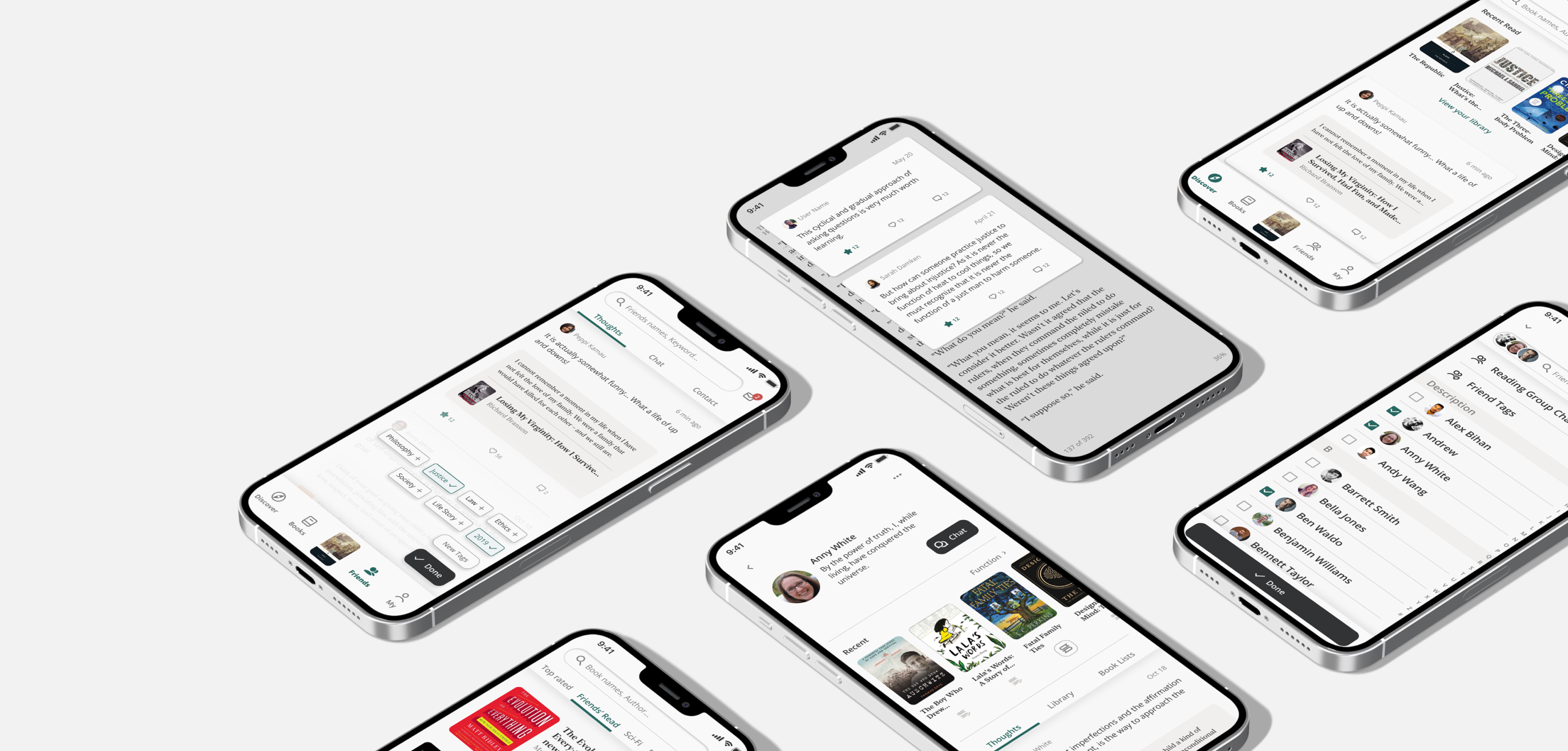
I read e-books — and I noticed what the convenience costs. Concentration slips, comprehension fades, and the thinking a book provokes has nowhere to go. This capstone explores a more proactive reading experience: one that stimulates reflection and deepens comprehension instead of flattening them.
Secondary Research
Overview of E-book Market
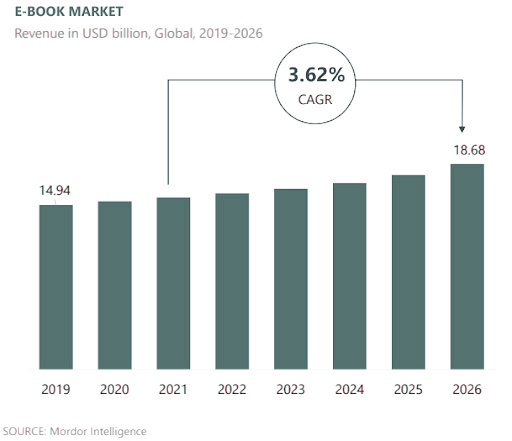
Increased use of e-readers
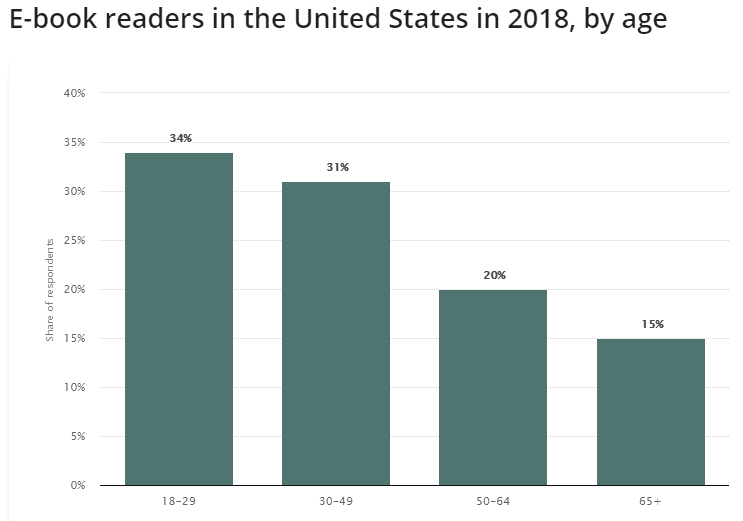
Major user group: young adults
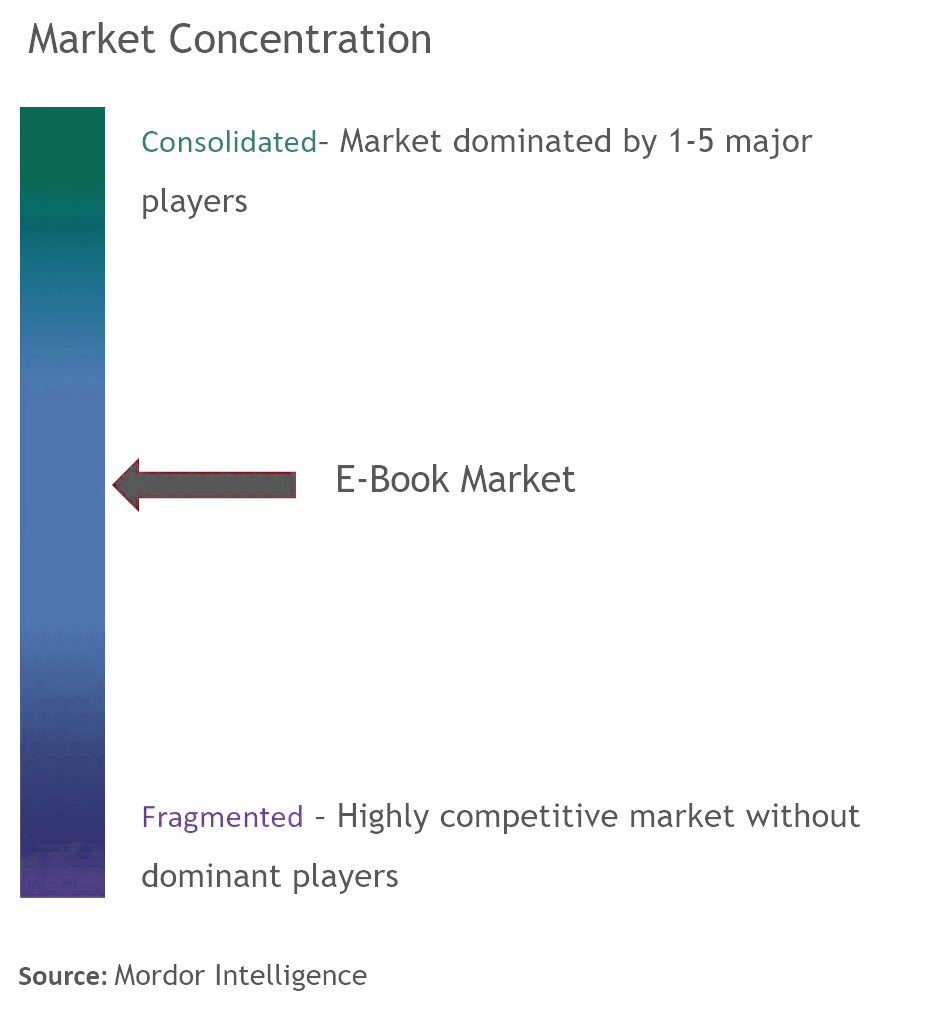
A concentrated market with major players
Sources: Statista; Mordor Intelligence.
Secondary Research
E-reader Behaviors Change During Covid-19
E-reading used to skew light and leisurely. During Covid, sales of non-fiction, education and language titles spiked — readers had started reading on purpose, for personal development.
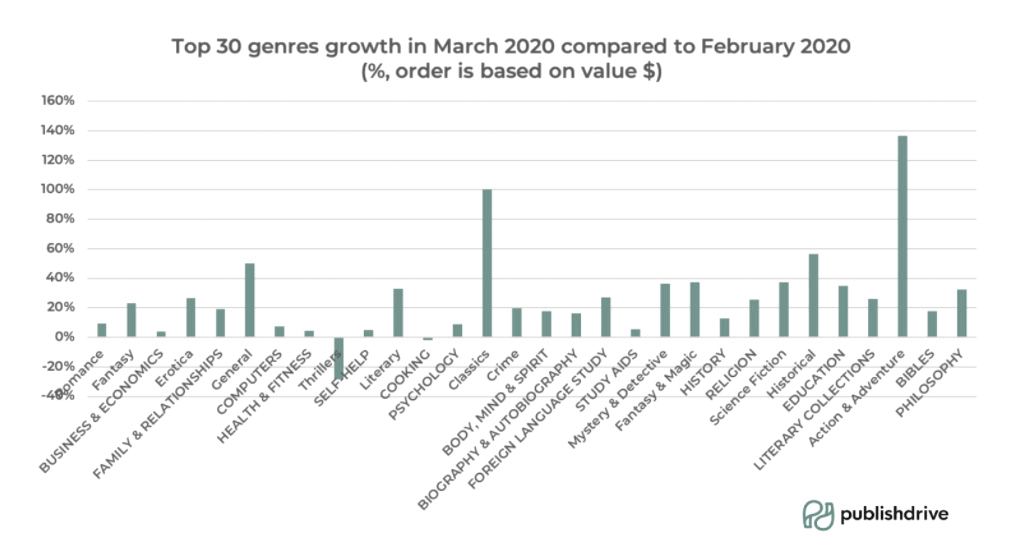
Sources: Journal of Publishing Culture; PublishDrive.
Competitive Analysis
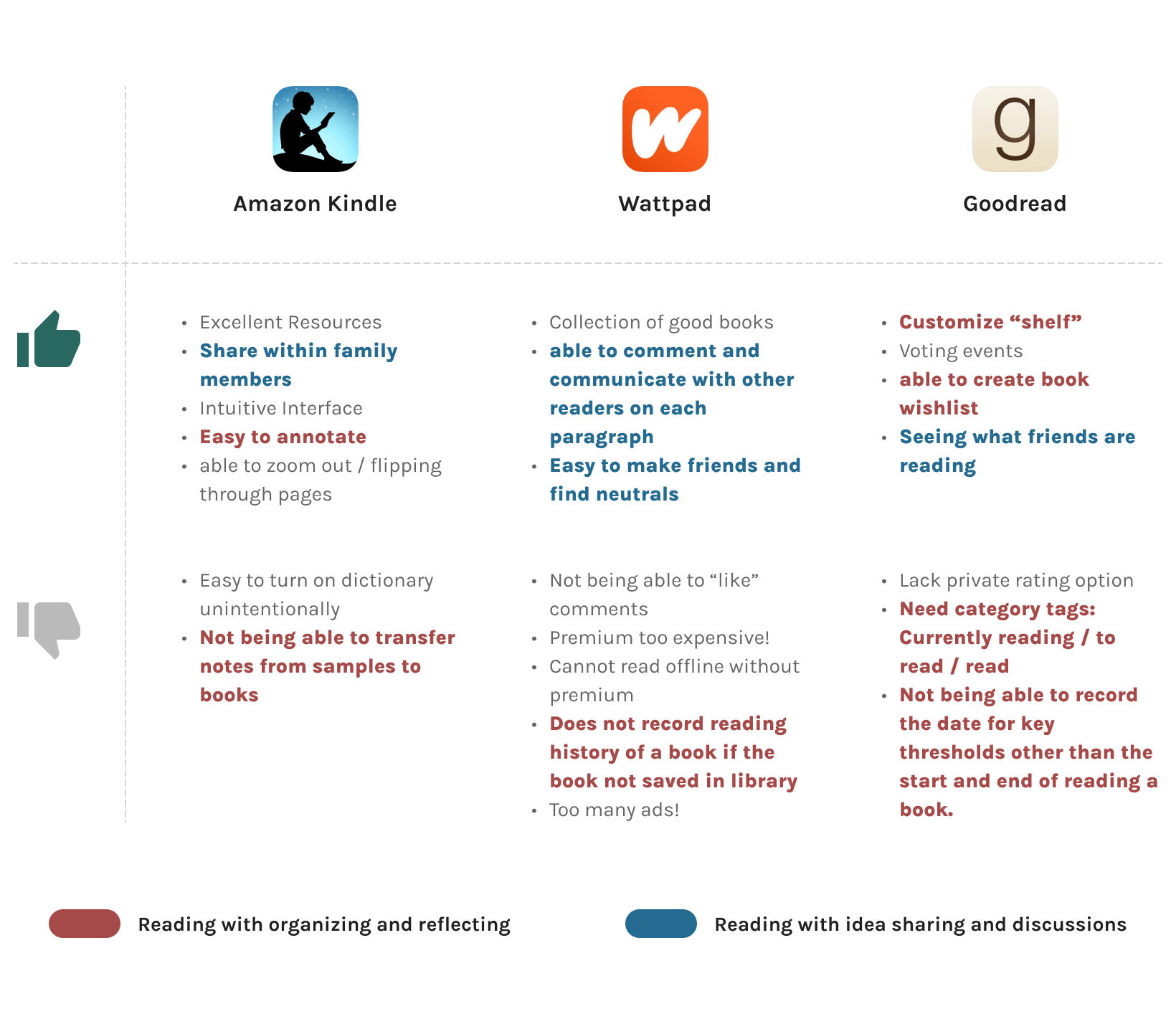
Reading × Idea Sharing × Organizing
I mined App Store reviews of three competitors — Kindle, Wattpad, Goodreads — and synthesized them into one sheet. Two findings held across all three: what users love most clusters around sharing ideas and discussing with others, and what frustrates them most is reading management — organizing notes, tracking history.
User Survey and Interview
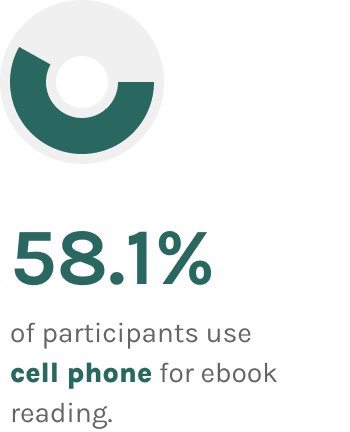
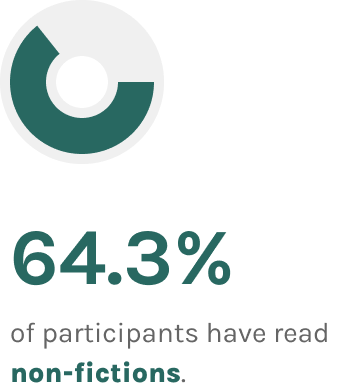
 27 Participants for user survey
The survey screened interview candidates and added quantitative texture to the secondary research.
 5 User interviews
Five interviews went deep on habits, motivations, and reading stories. Participants: aged 18–35, any gender, consistent readers with e-book experience.
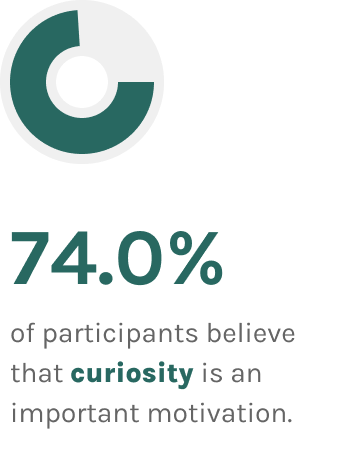
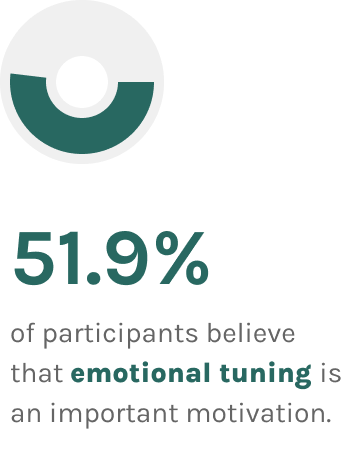
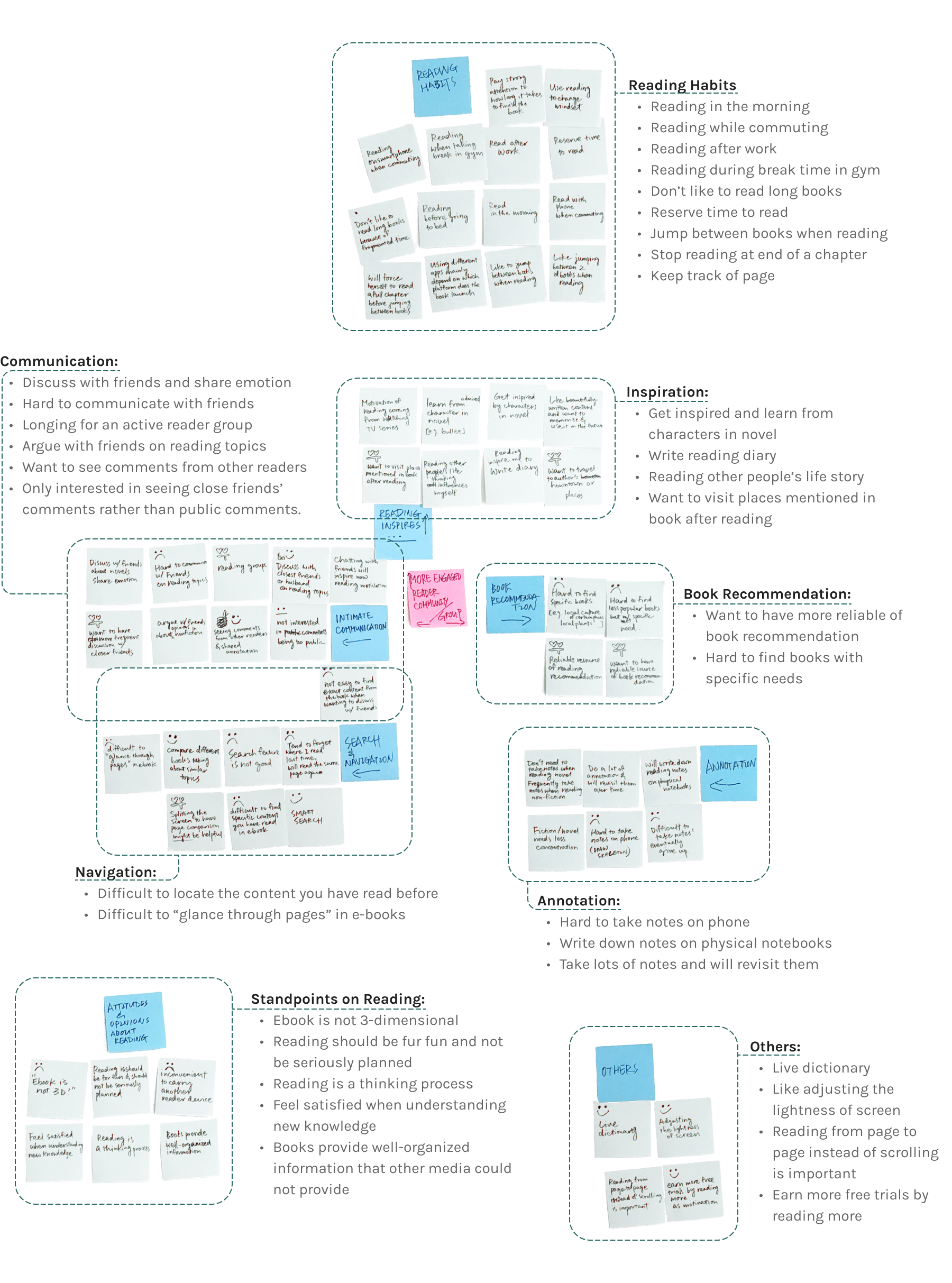
The insights were re-categorized into an affinity map — habits, communication, inspiration, recommendation, navigation, annotation, and how people think about reading itself.
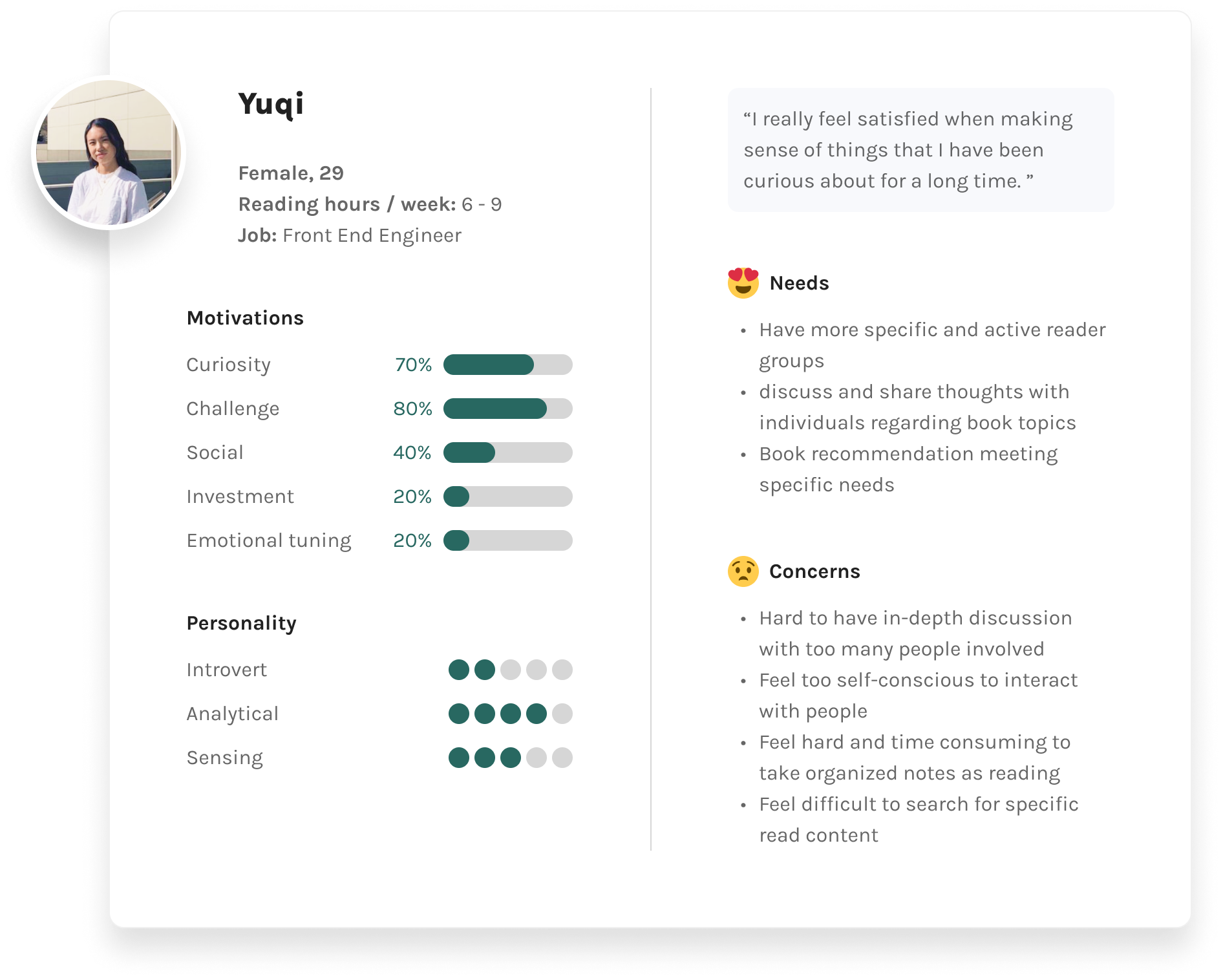
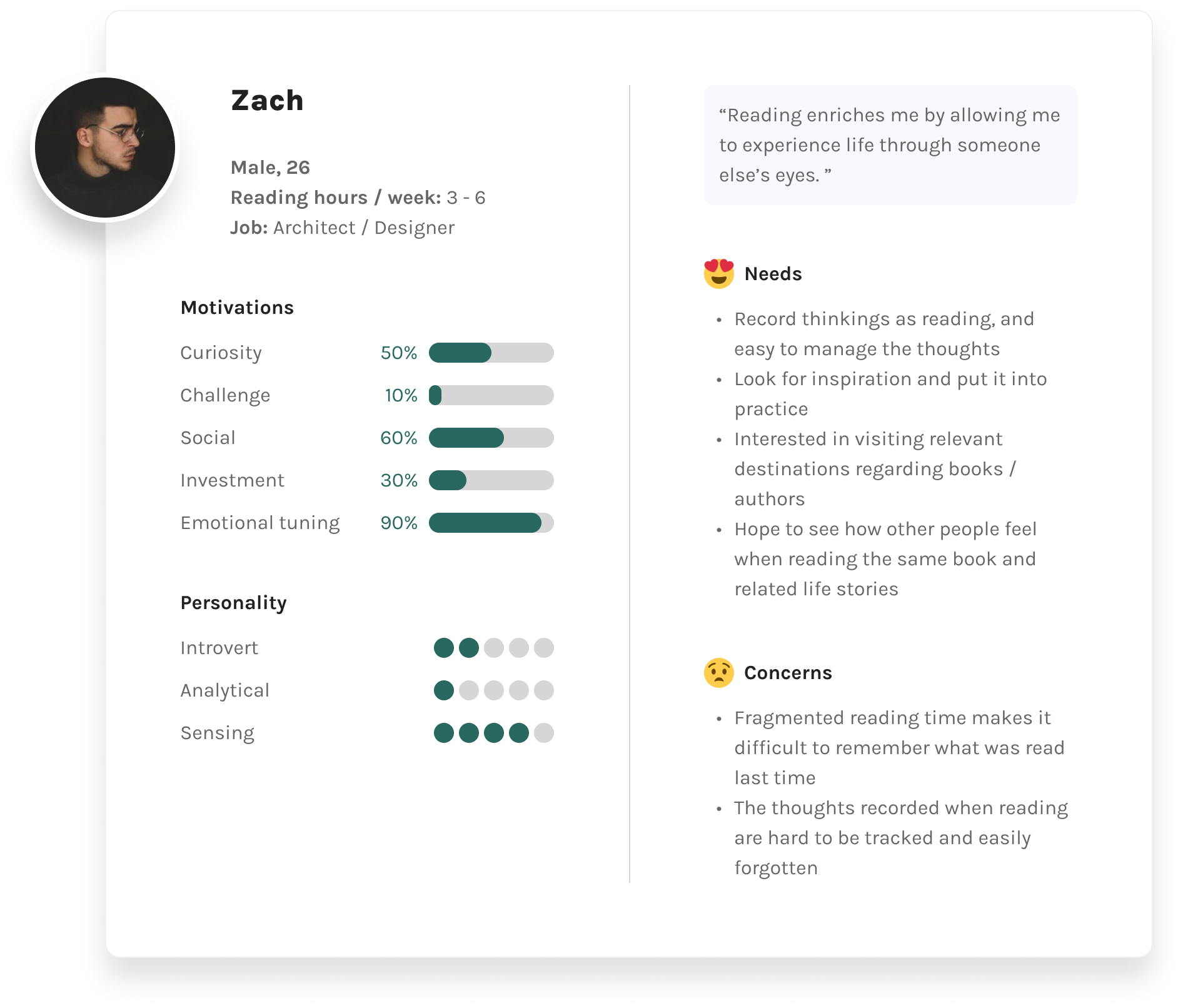
Persona
Defining
Seeking Design Opportunities
Every observed frustration folds into one How-Might-We frame:

Treating the four as problem statements, I brainstormed wide before narrowing — the word cloud is the wide; the four themes are the narrow.

Ideation
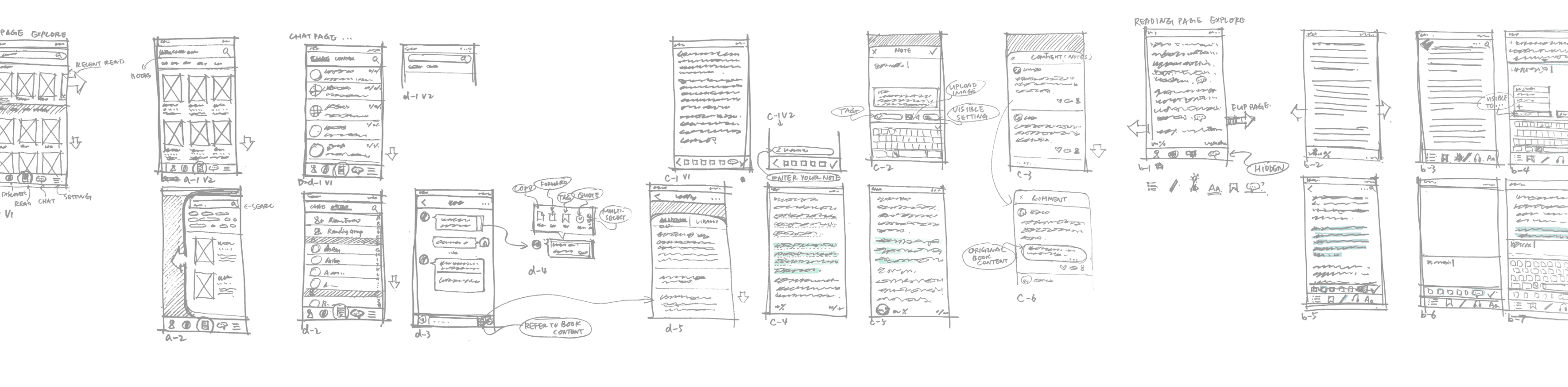
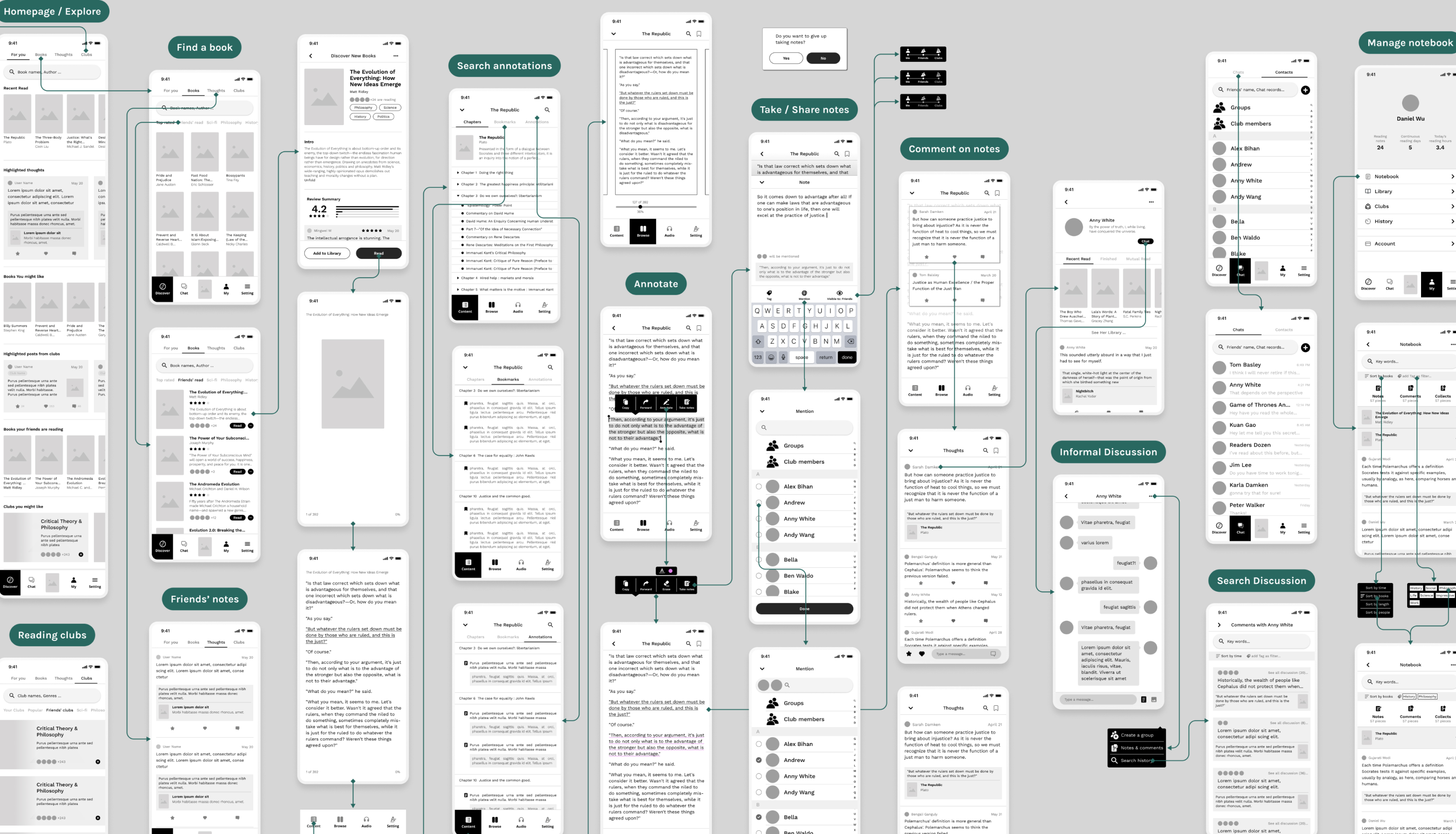
From Sketches to Wireframes
Sketches distilled into an information architecture, a site map and user flows; a paper prototype for the MVP followed, then a lo-fi prototype. Guerrilla testing with five people caught the first-order problems early — including the one that mattered most:
“When I first saw the homepage, I thought this was just a normal e-book reading app, and didn’t realize the things you introduced to me.”
Design Iterations Based on Test Findings
5 Participants for usability testing
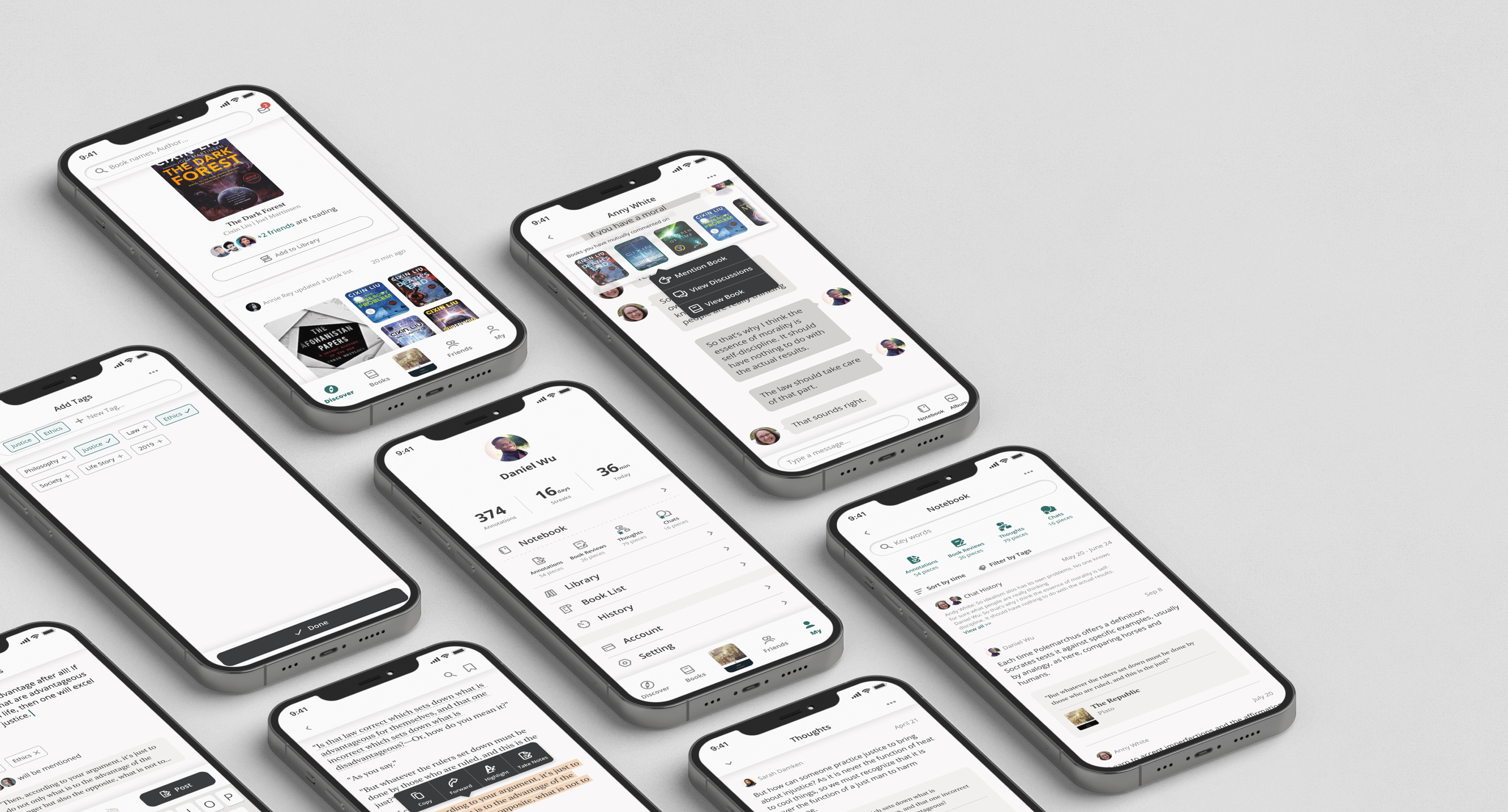
Two rounds: lo-fi for flows, layout and functionality; hi-fi for accessibility, copy and detail. The iterations below are organized by the four themes.

To Discover
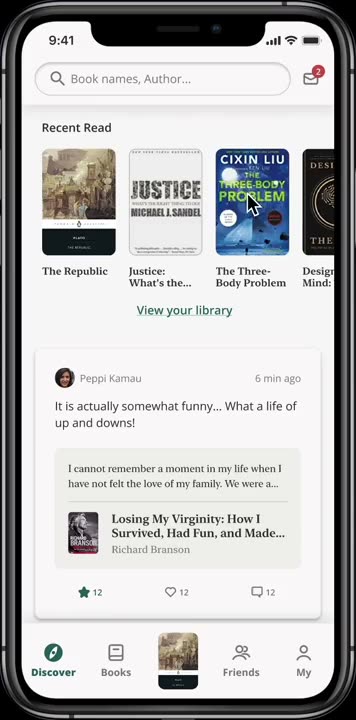
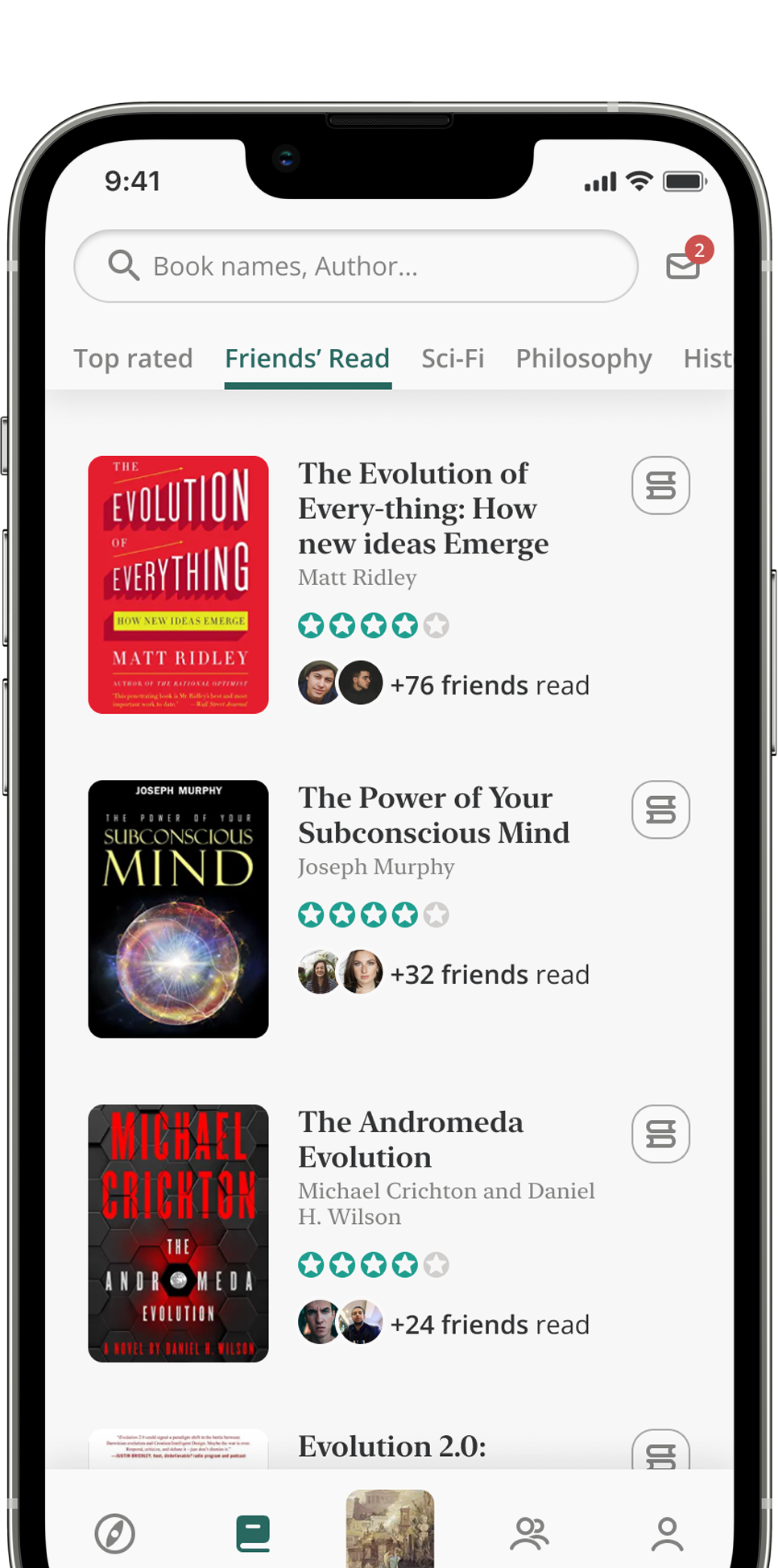
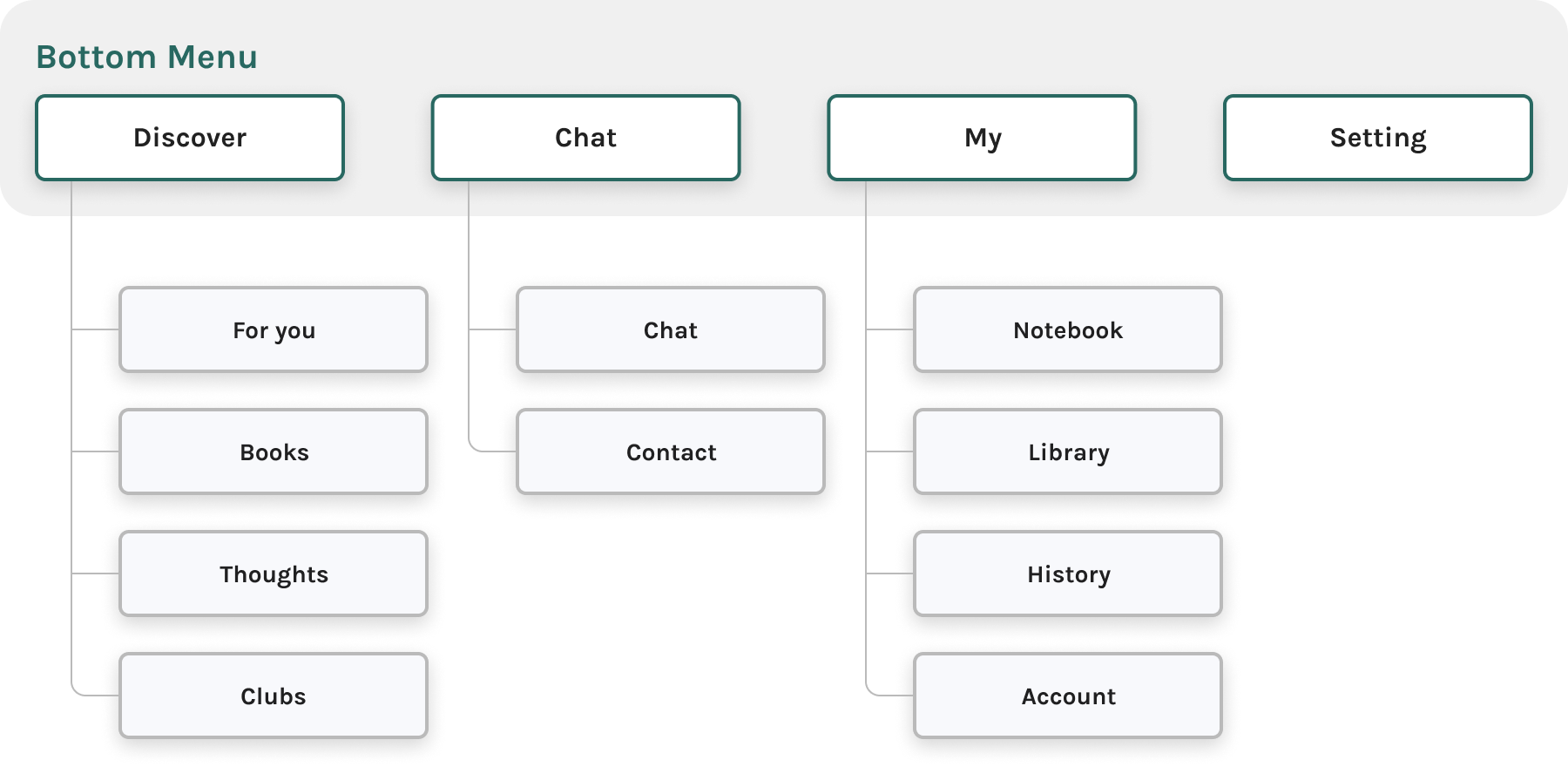
Navigation Structure
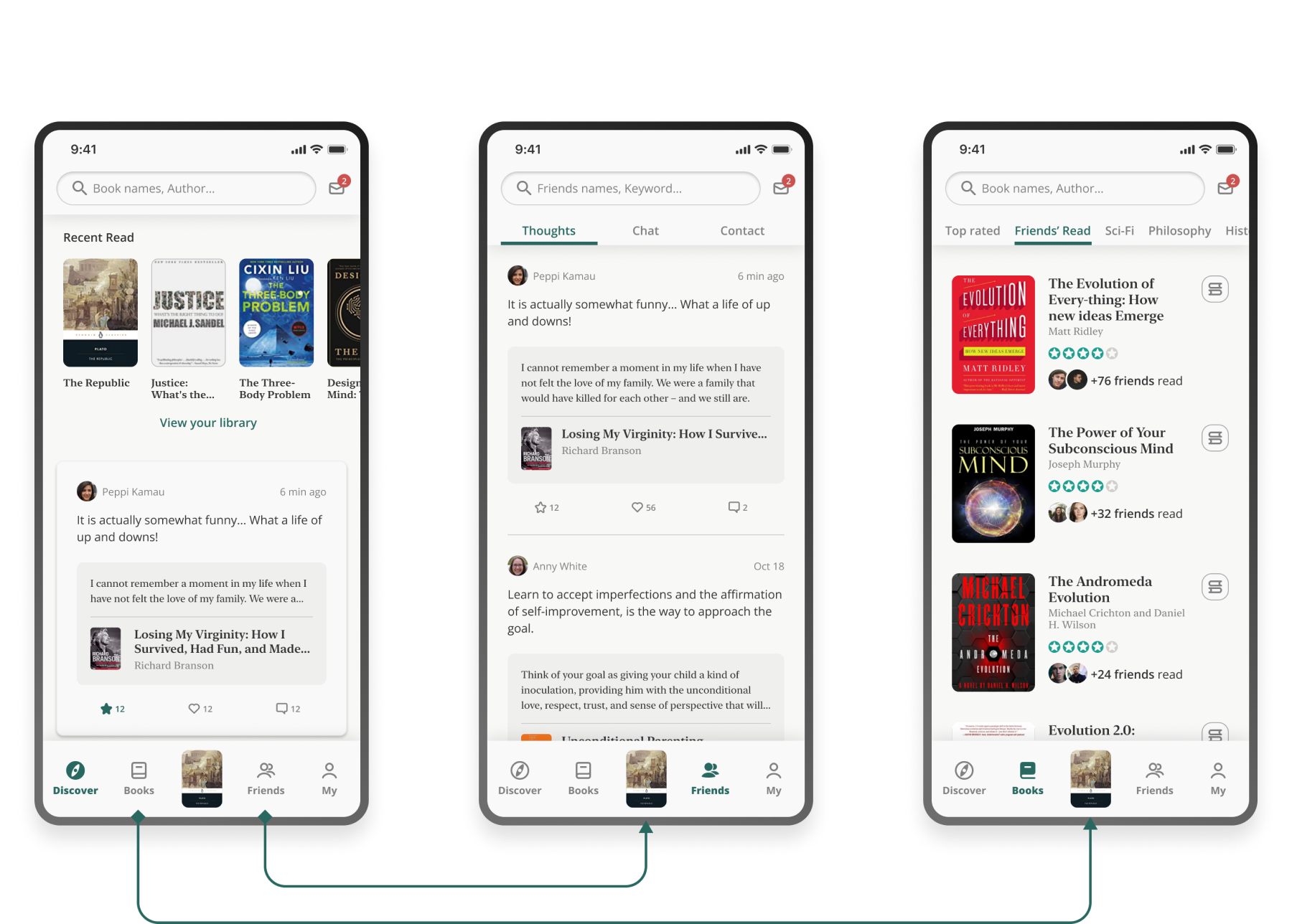
the bottom menu didn’t say “e-book app”: everything important hid inside one Discover tab, so the secondary bar outranked primary navigation — and it was too much for an MVP.
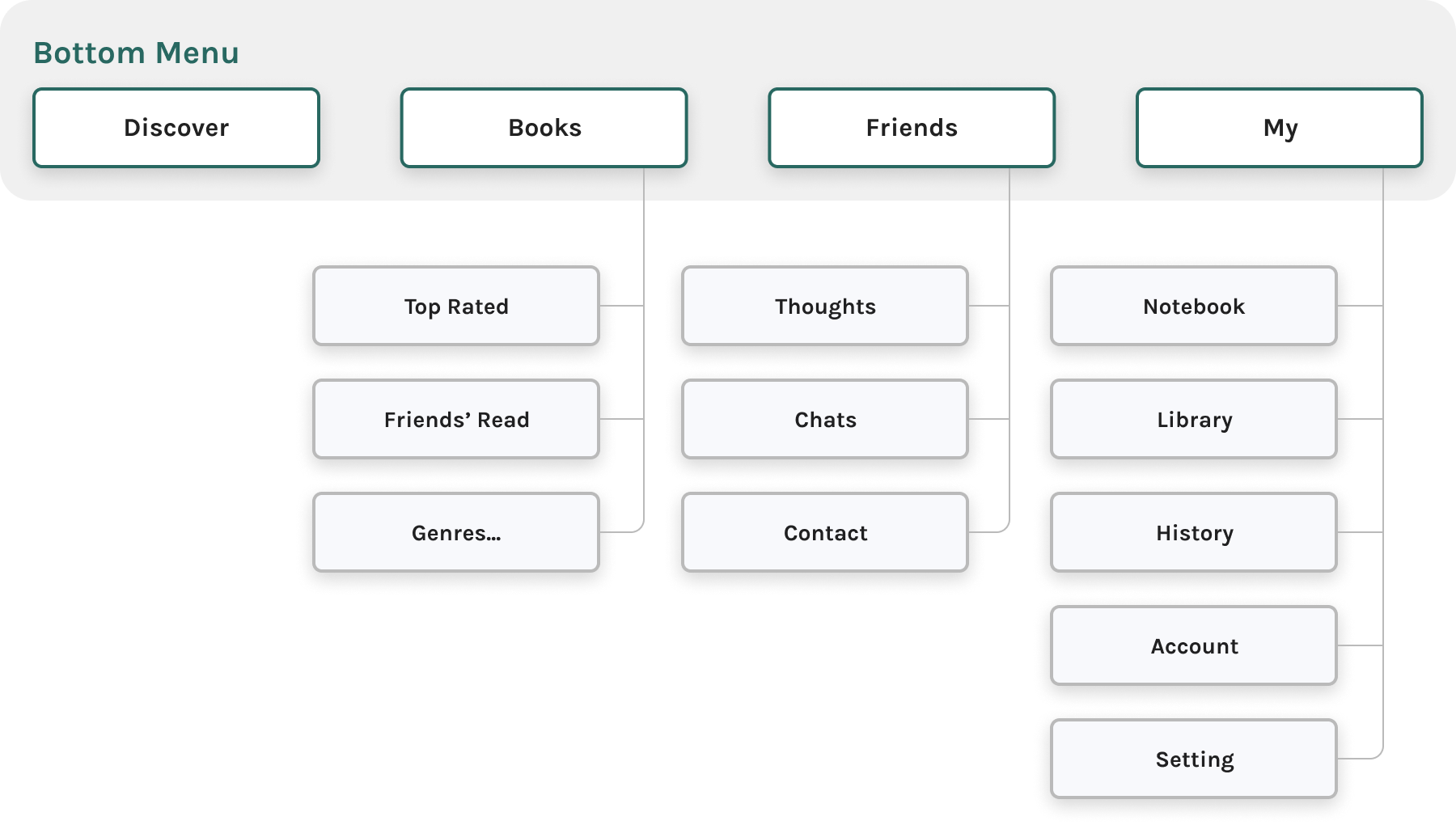
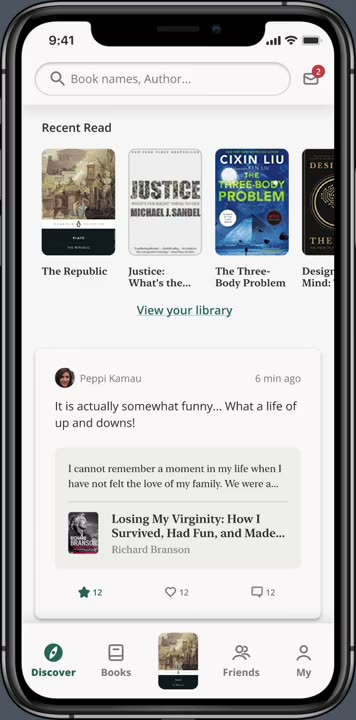
clubs cut; the bar rebuilt to state the idea outright — Discover, Books, Friends, My. Reading, with friends.
“Explore” Page Pattern
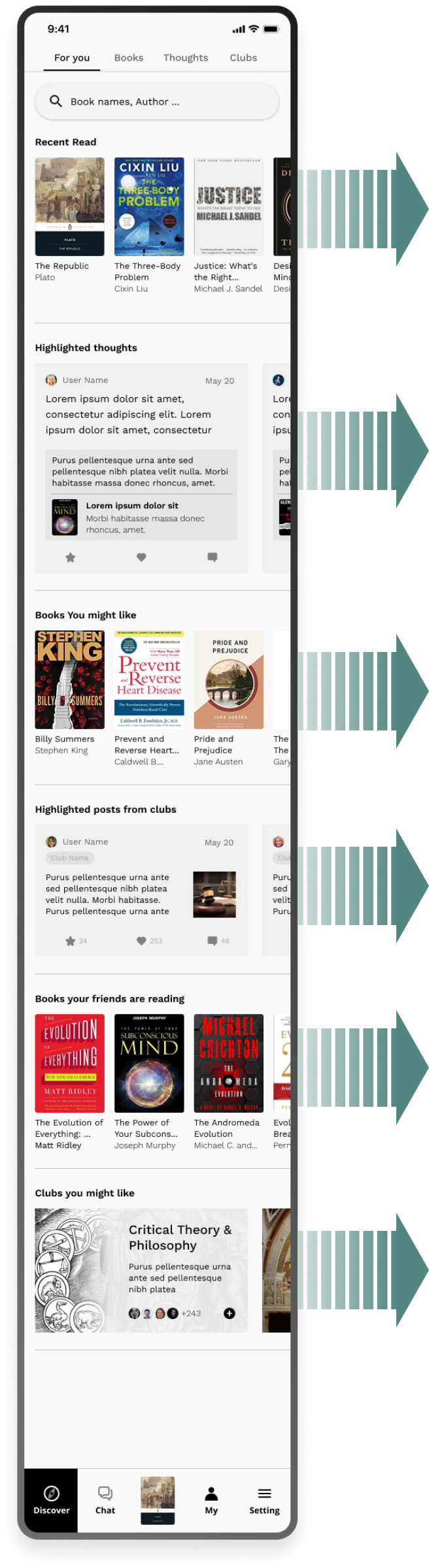
- Categories by scroll, feeds by swipe.
- In testing, most participants scrolled to the bottom without ever finding the swipe.
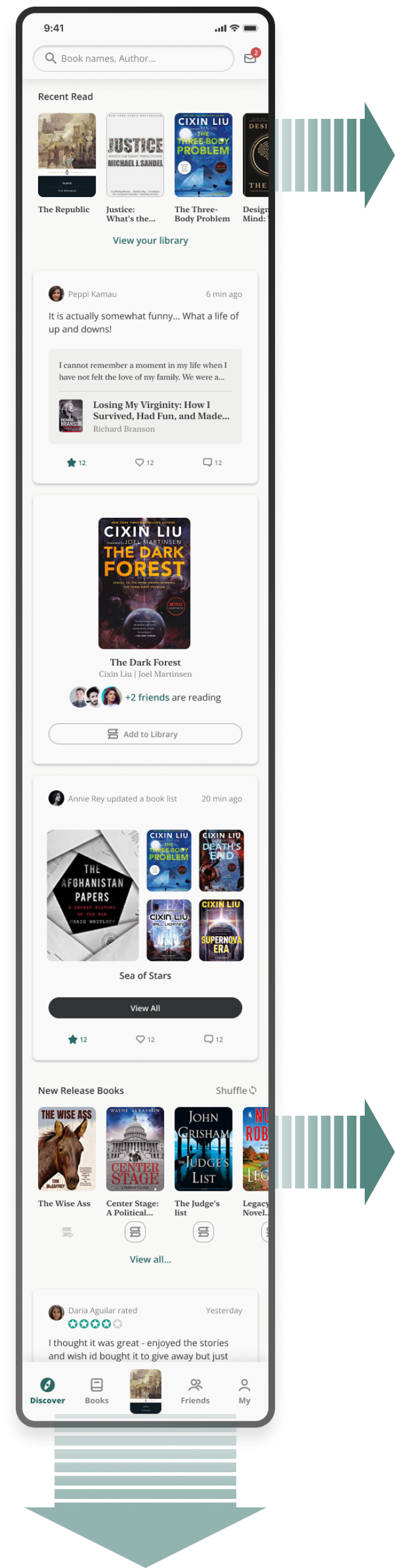
- One infinite scroll of feeds.
- Weighted toward friends’ thoughts and book-list updates.

To share
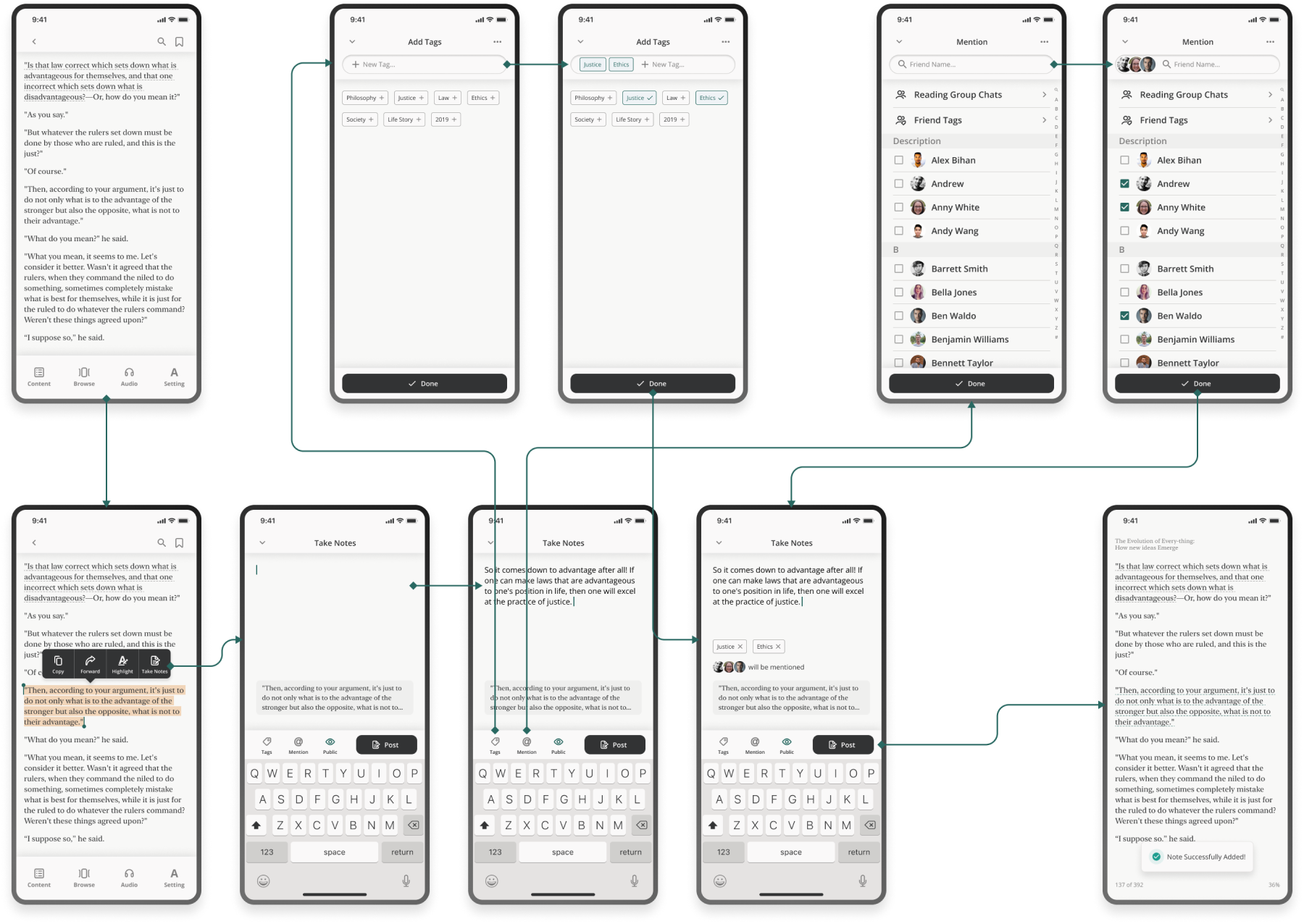
Annotate and Share-Note Flow
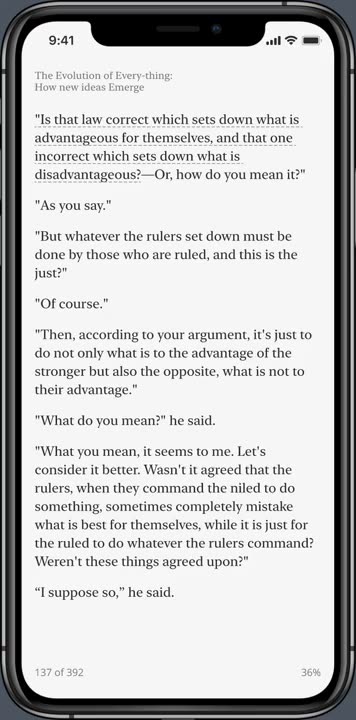
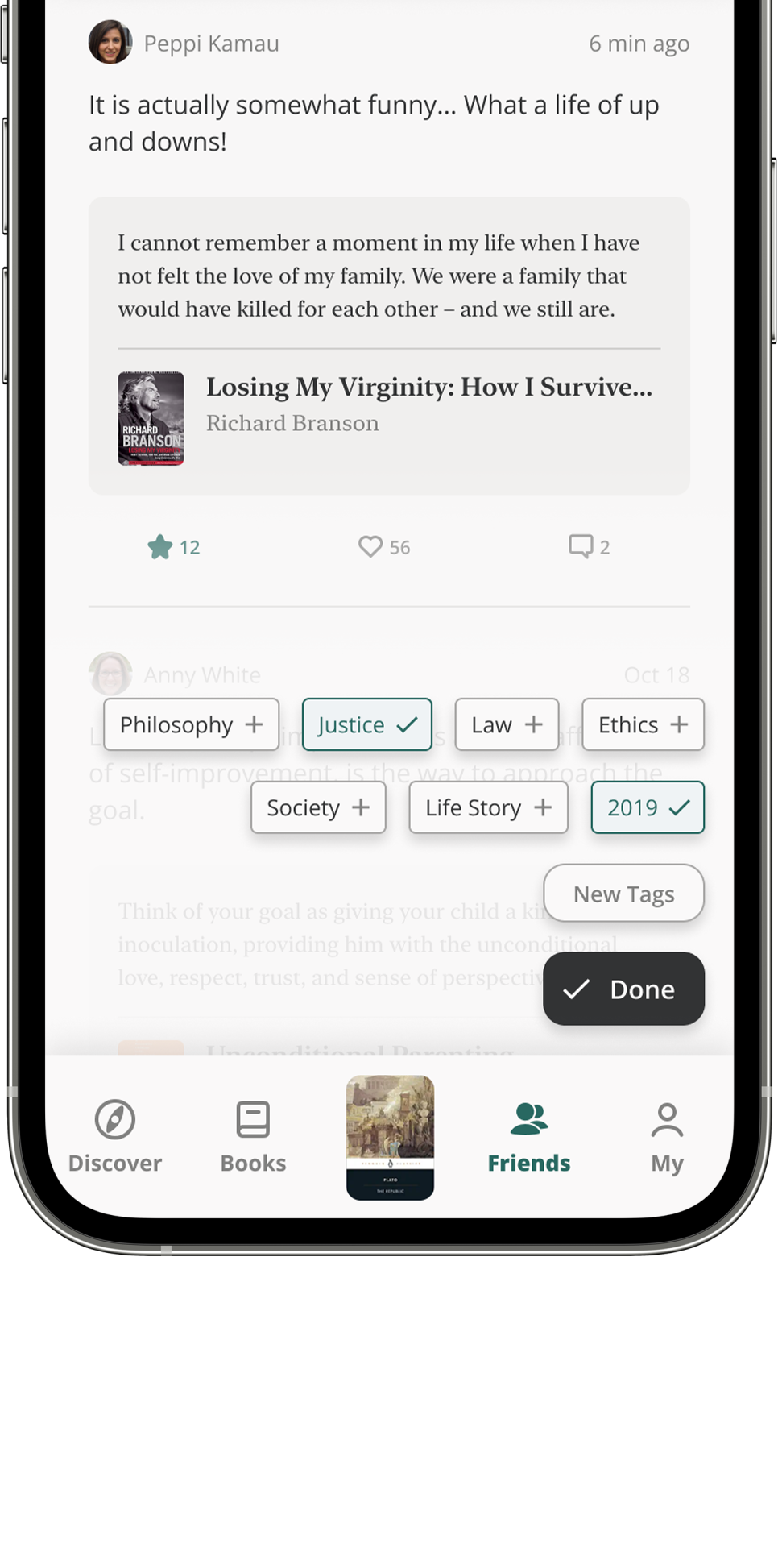
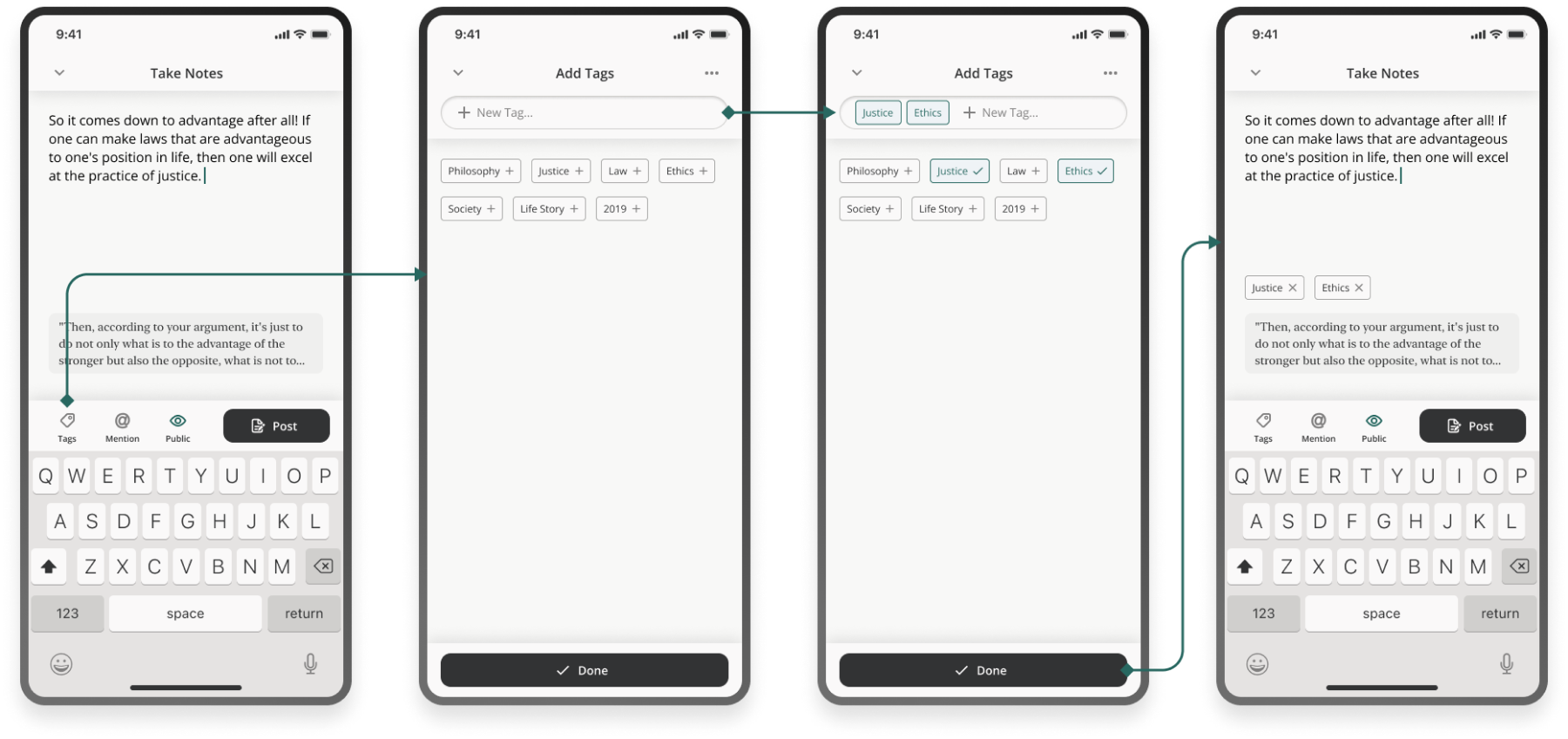
Notes take tags for organizing and a public-or-private setting — and Mention: name specific friends, and they’re notified and given access, whatever the setting.
Provide Options to Share Notes Exclusively
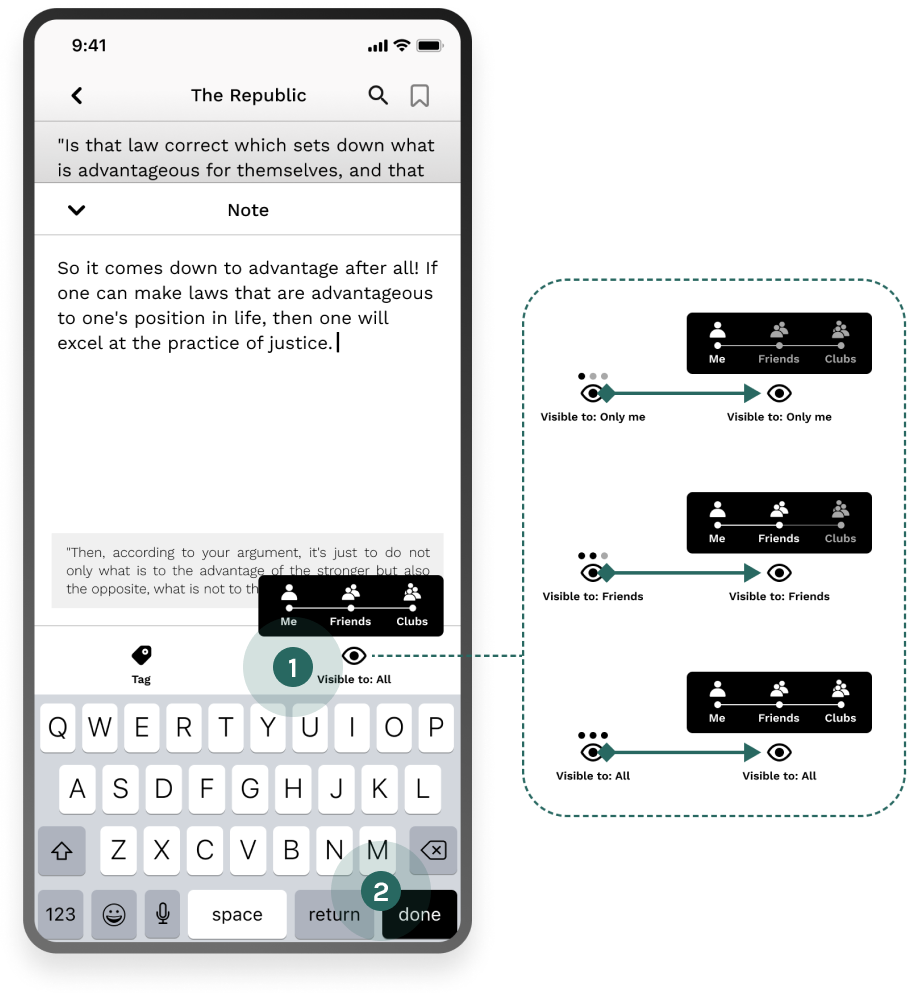
- A three-tier visibility setting — me / friends / all — that meant little: people follow strangers freely in reading apps, so “friends” is not a trust boundary.
- Two closing CTAs, return and done, confused the post action.
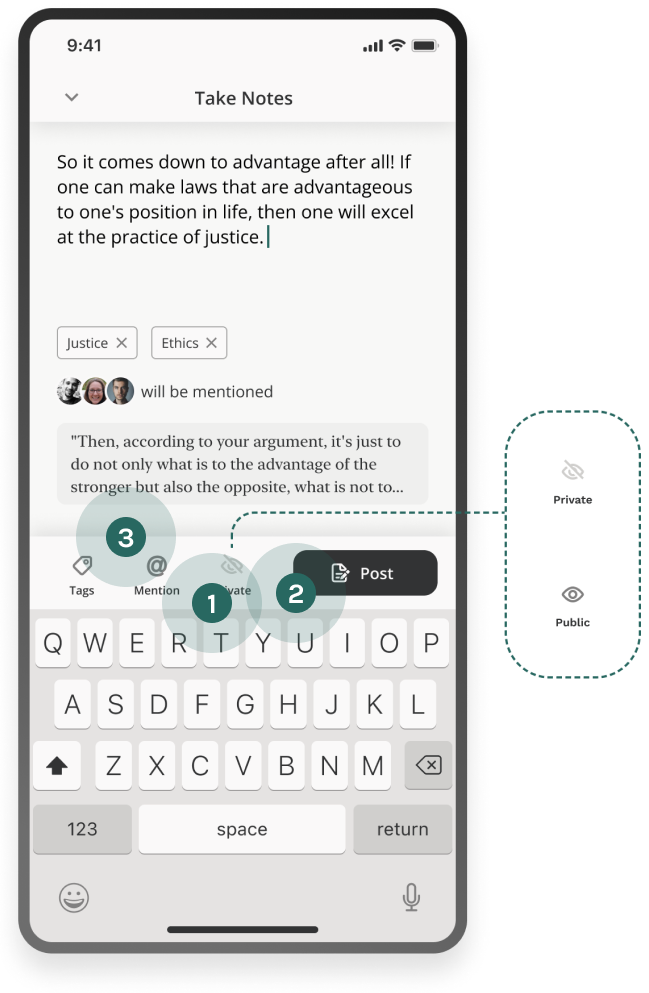
- Two modes only, public or private.
- The Post button moved where it’s expected.
- “Share to friends” grew into Mention — which names actual people and notifies them.

To Discuss
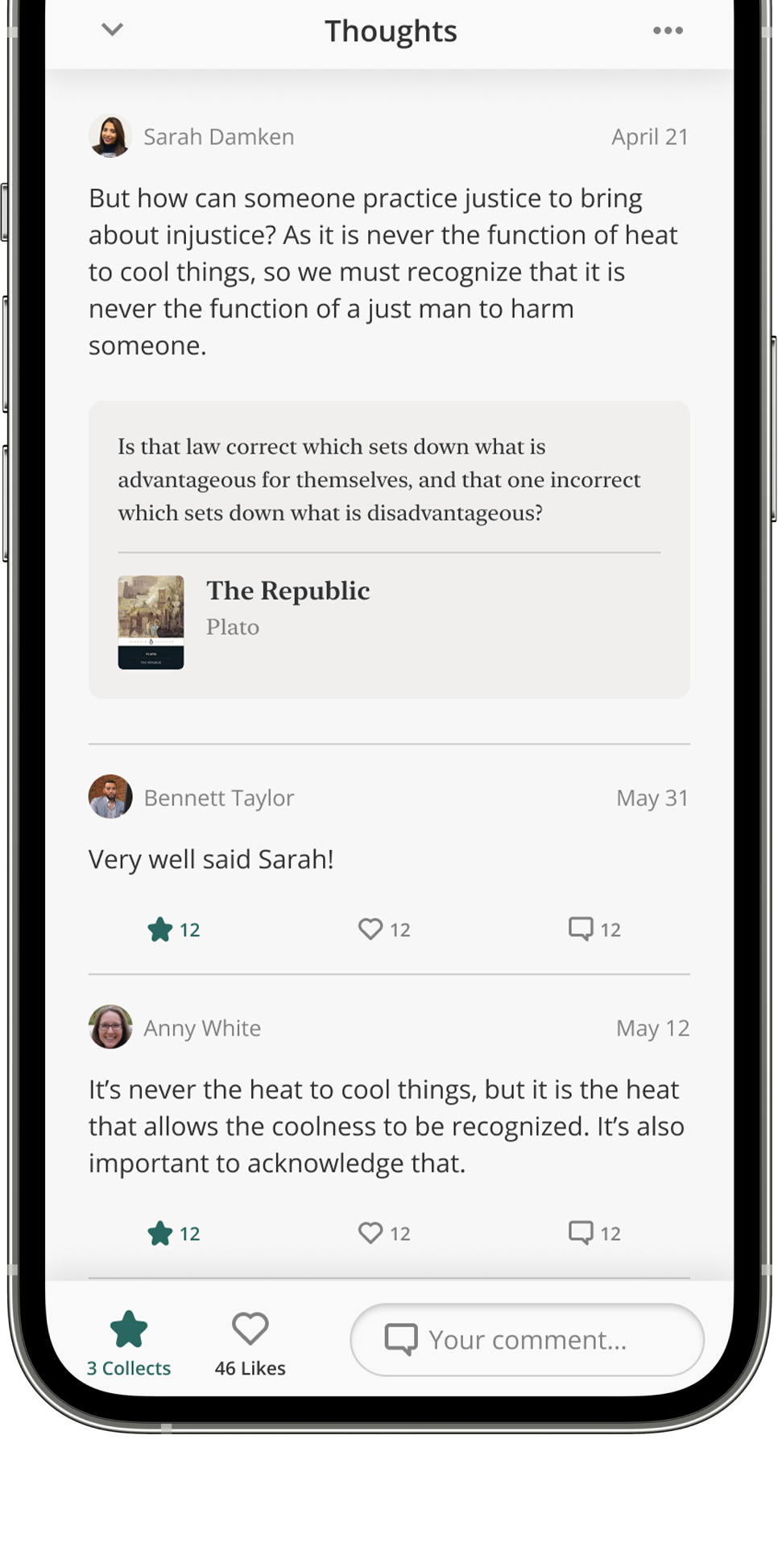
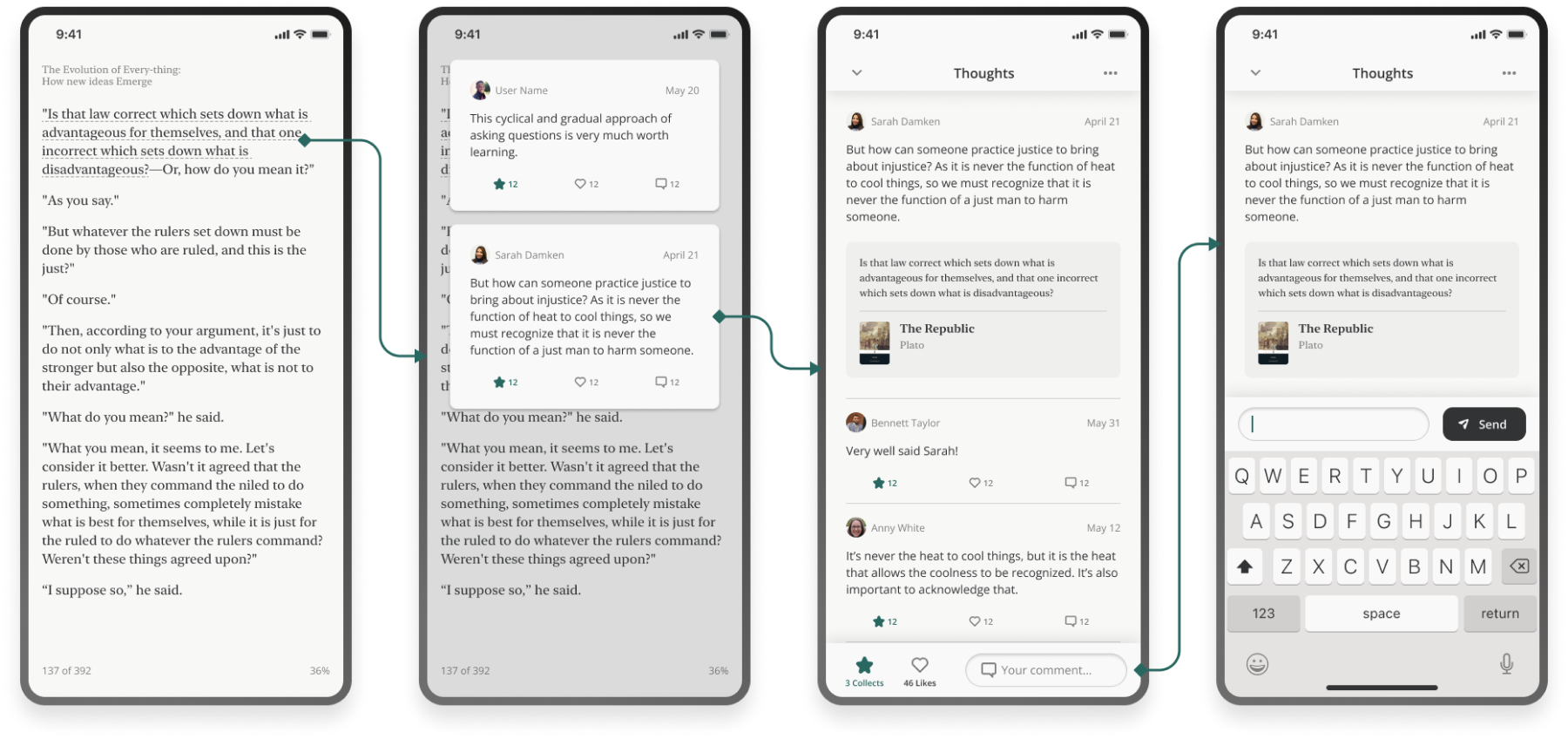
Public Discussion
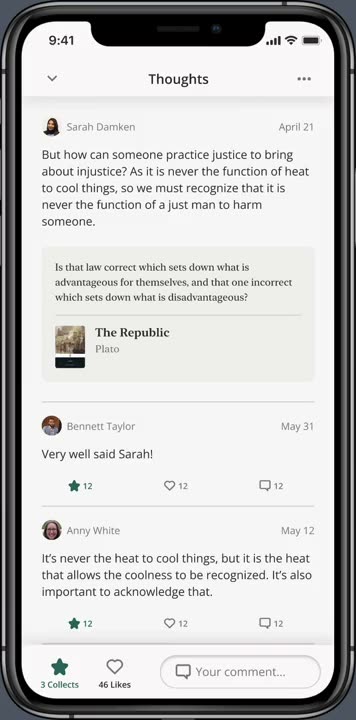
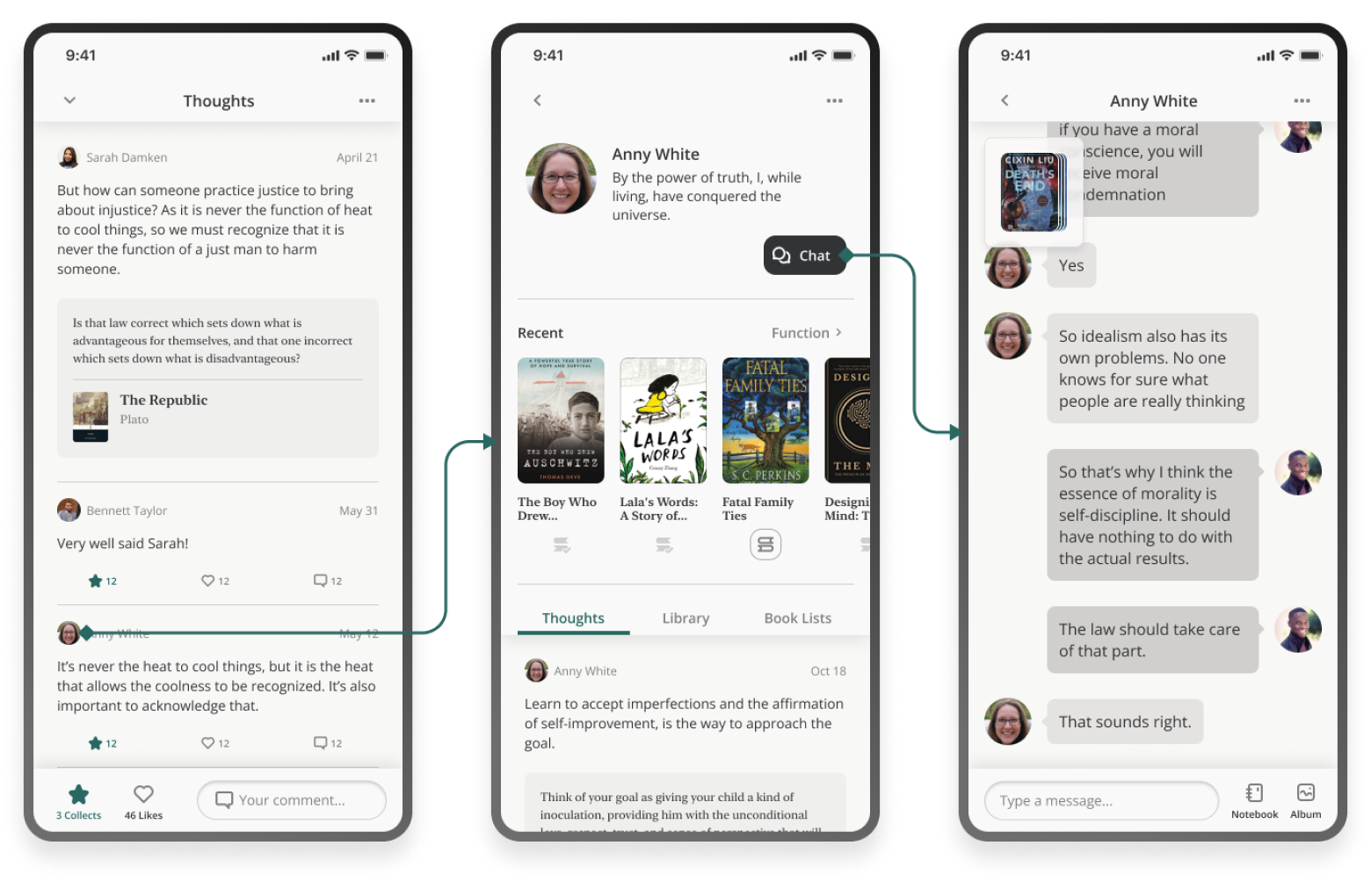
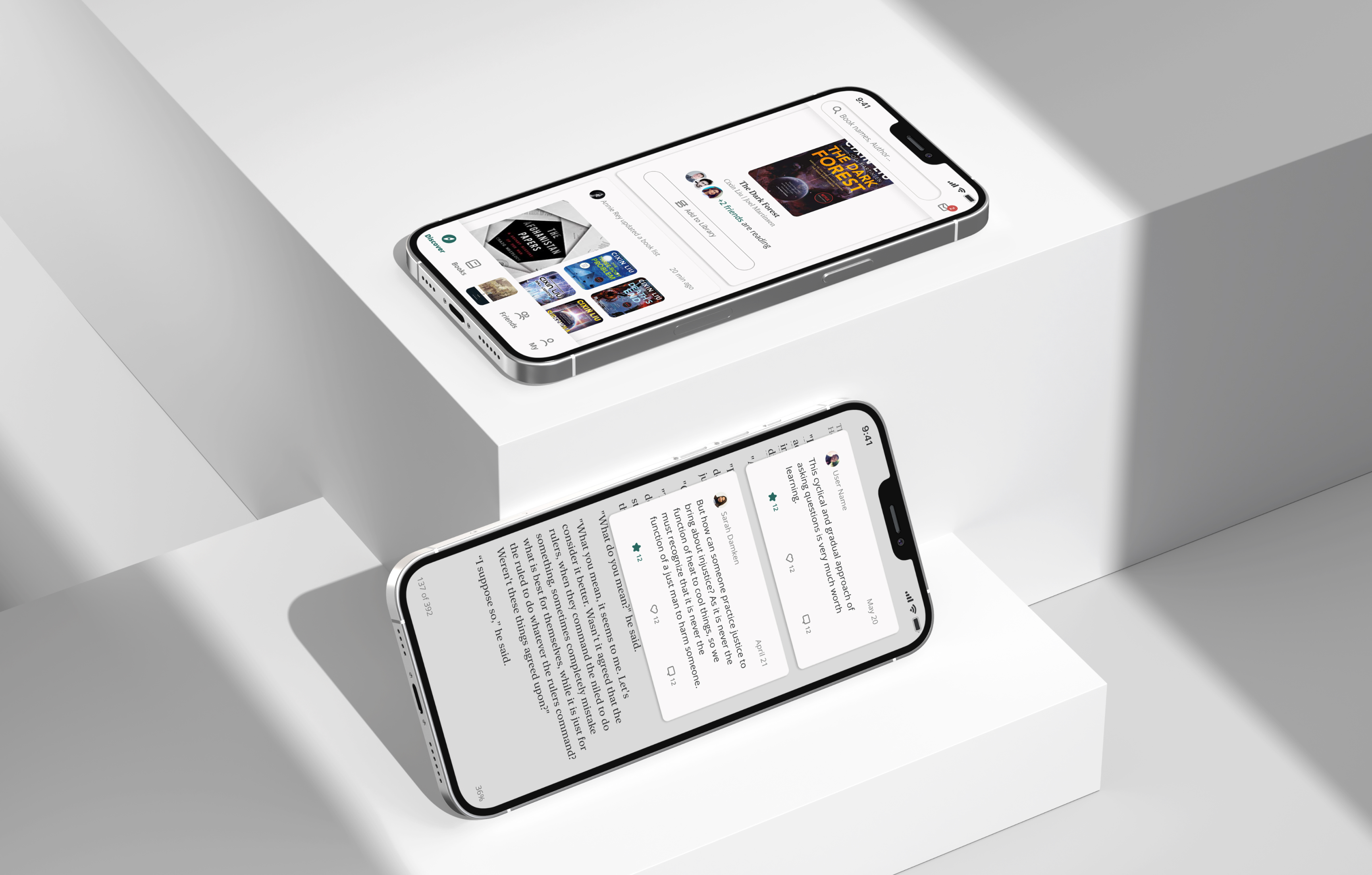
Public notes are visible in the reading view. Discussion happens by commenting under a note — and under other readers’ responses — so the book page itself becomes the forum.
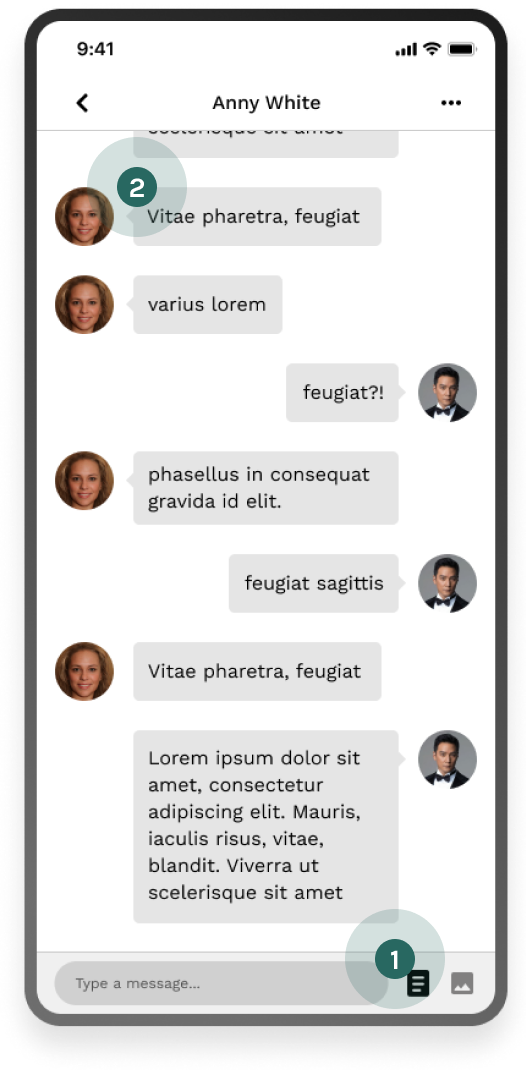
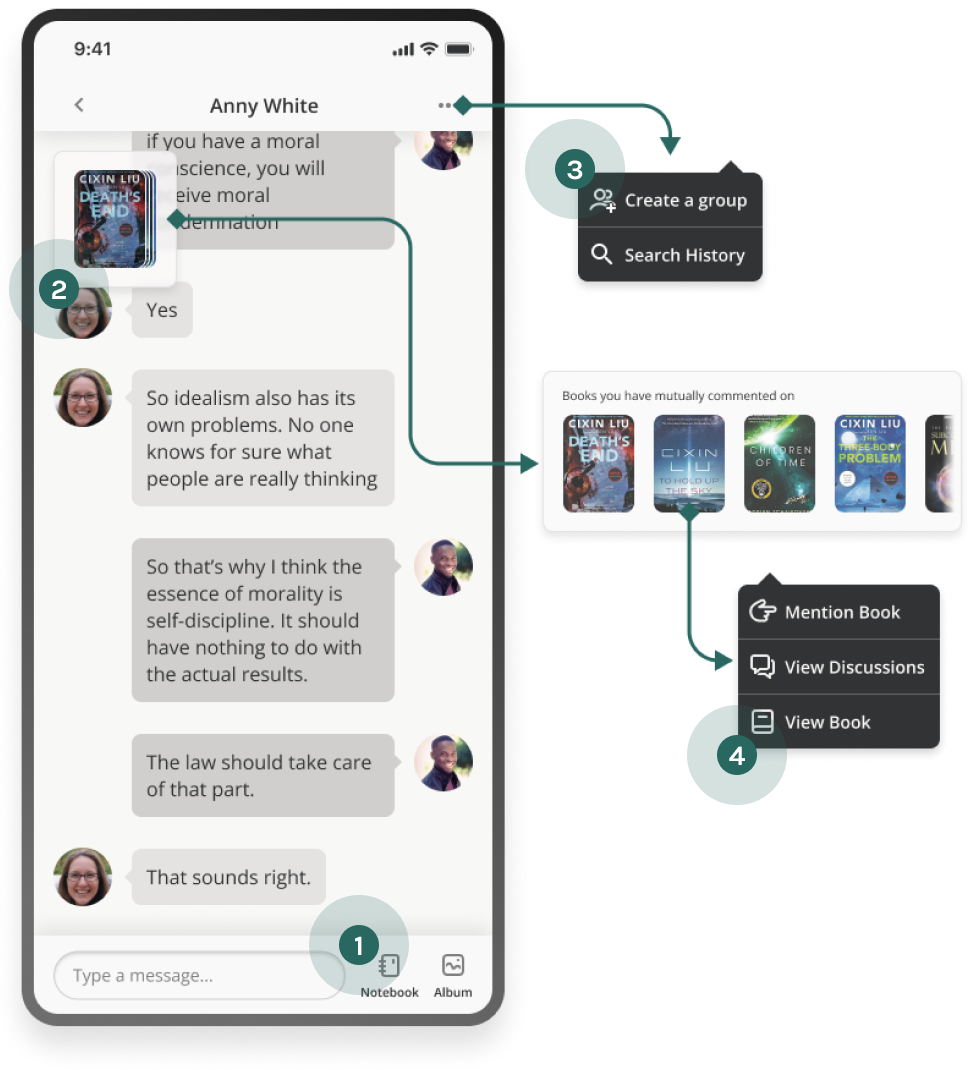
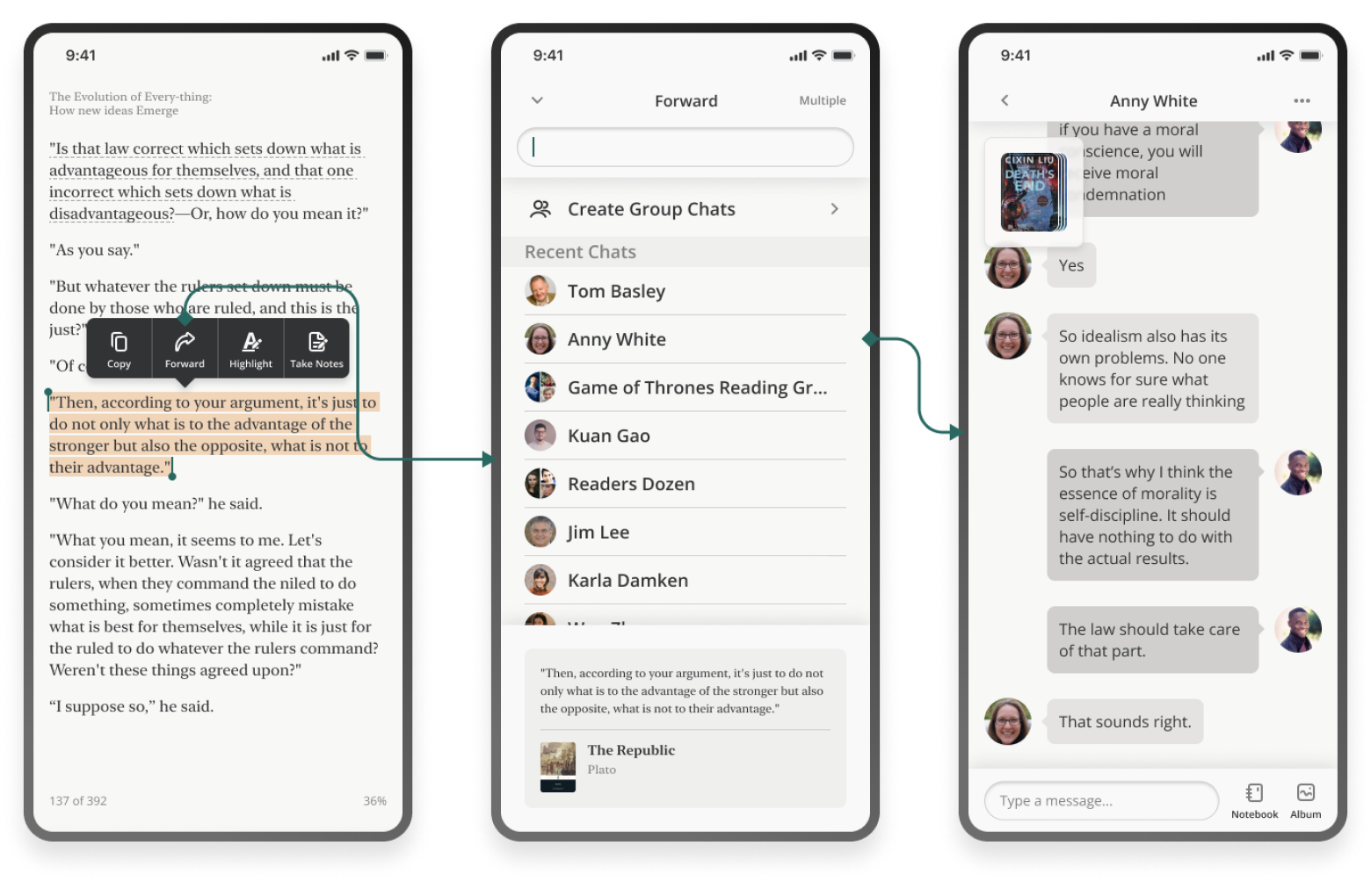
Private Discussion
Research was plain: many people won’t go deep in public.
- It wasn’t obvious what the icons represented.
- A generic chat screen that could belong to any app, not to an e-book one.
- Text added under the icons.
- A floating drawer of the books you’ve both commented on.
- An option to create a reading group.
- A route back to the public thread you came from.
Flexible Transition Between Discussion Modes
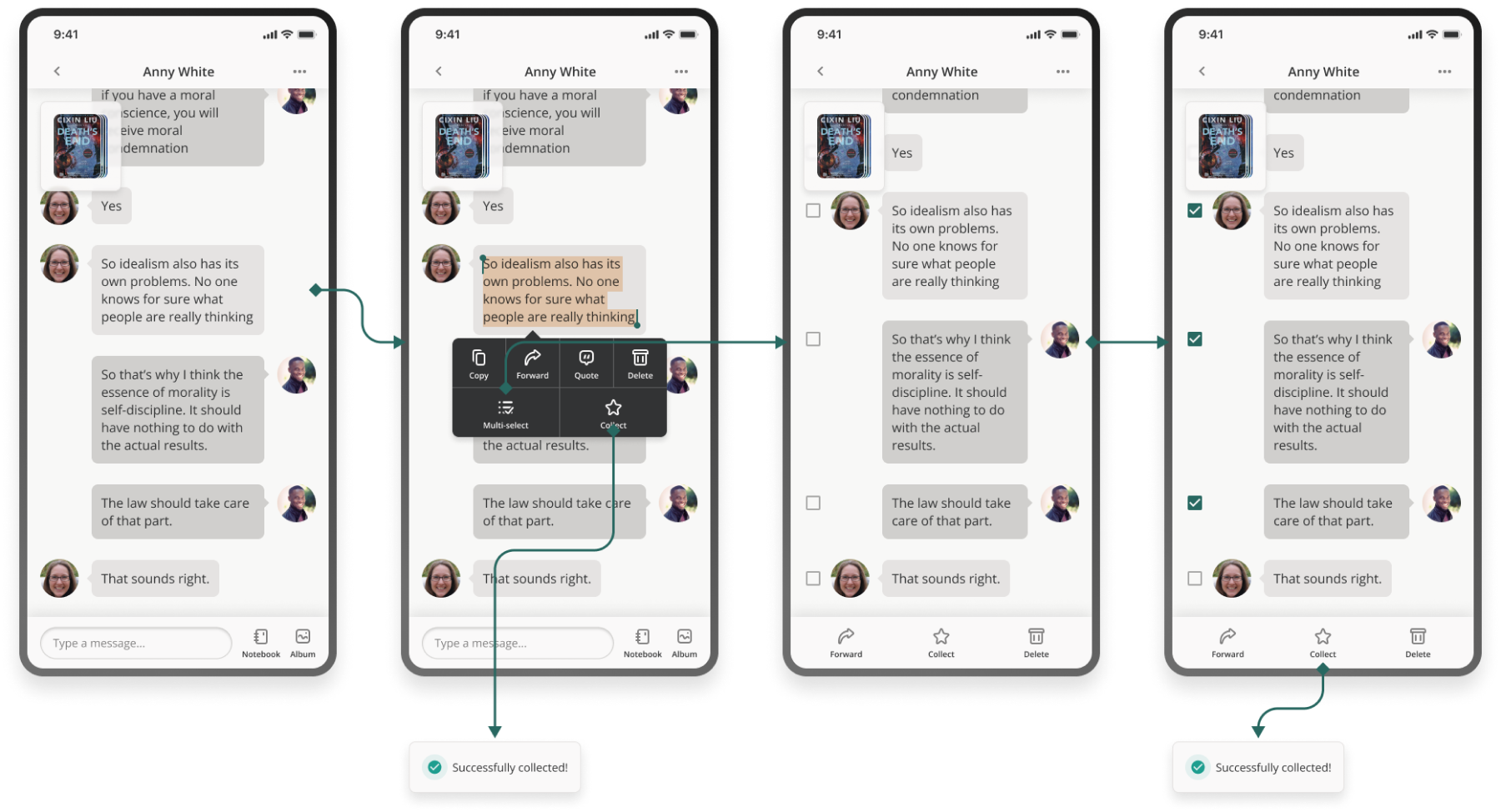
Discussion starts anywhere — so from any screen, users can reach comments or chat, and switch between the two with the context carried along.

To Organize
Notebook Screen
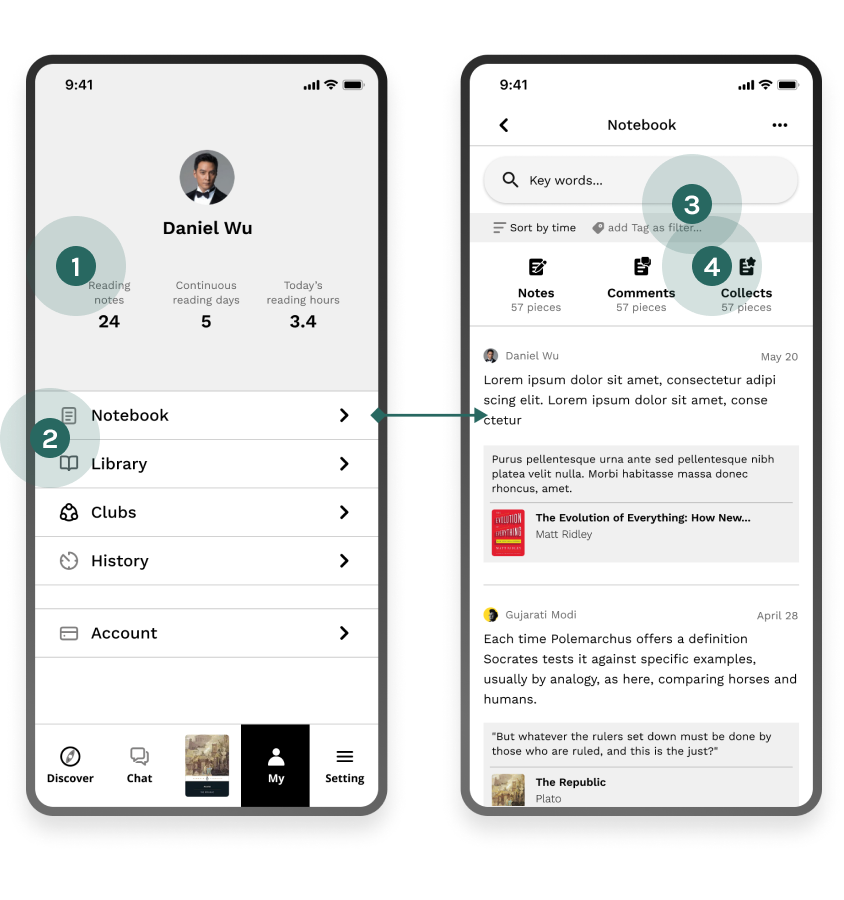
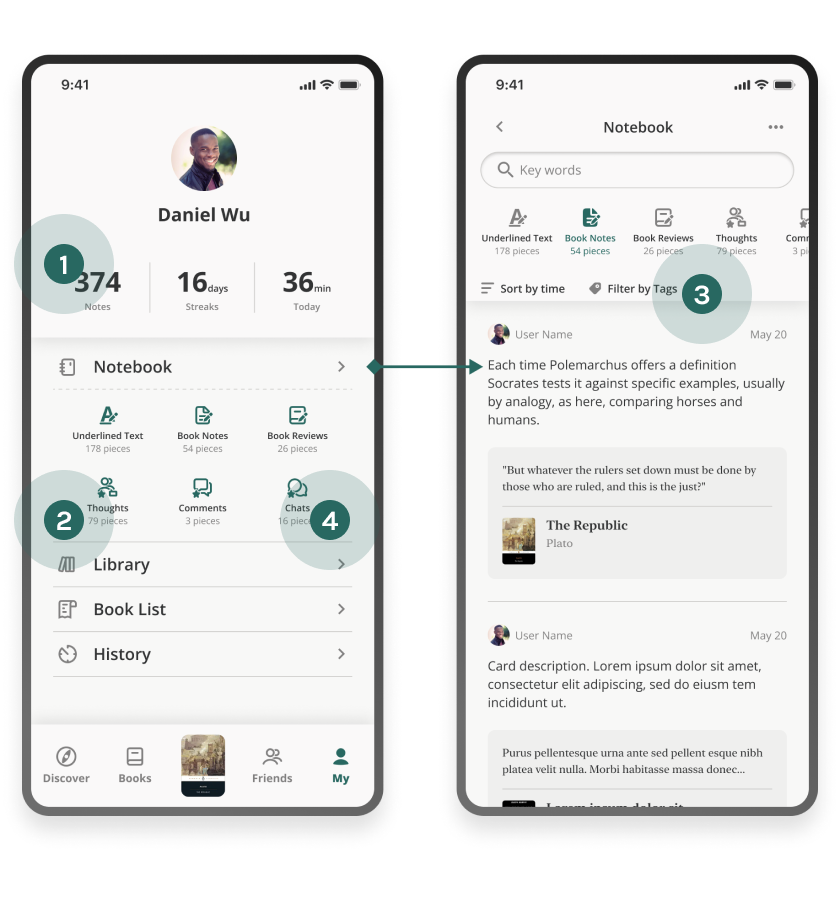
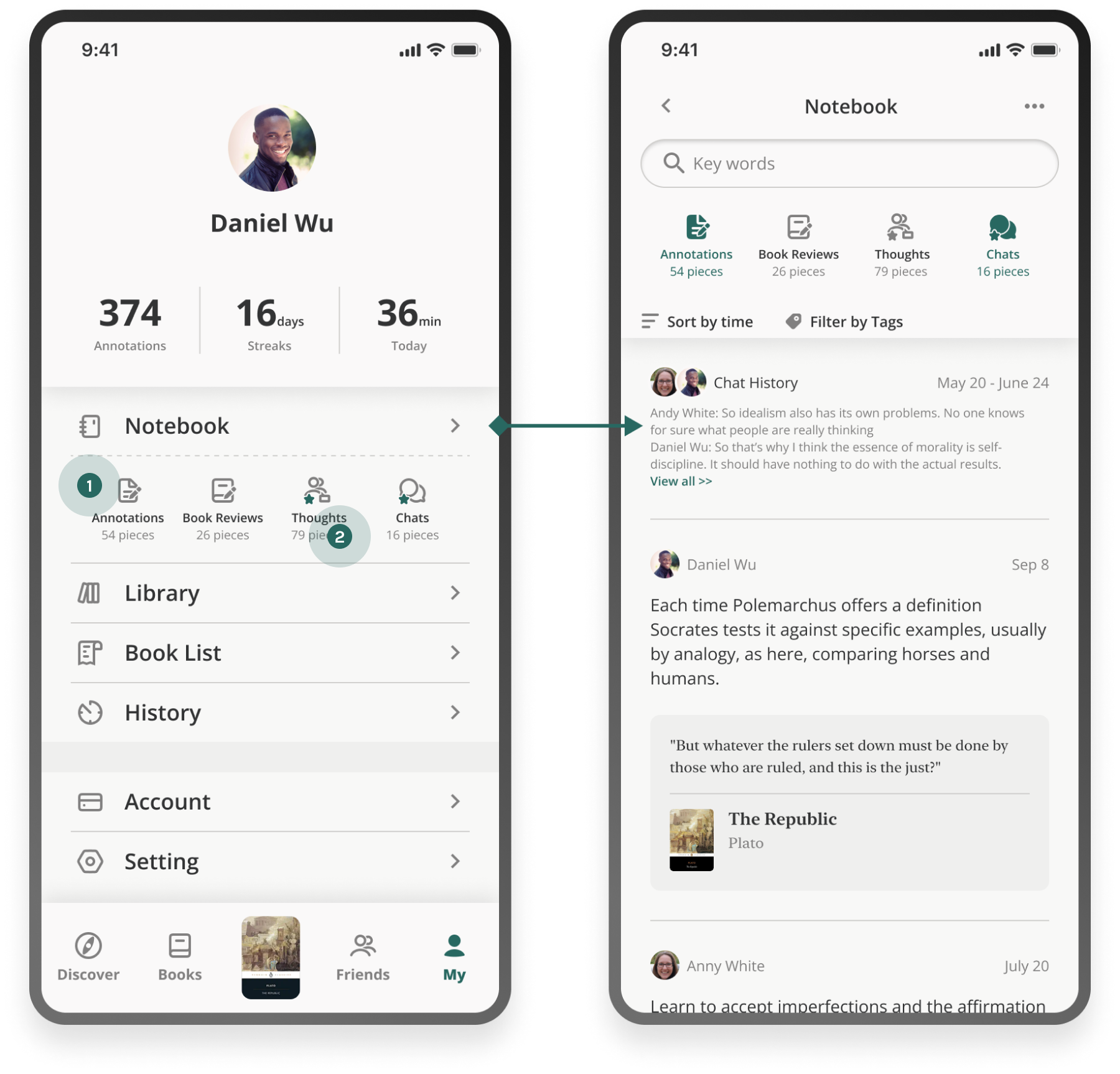
The wireframe over-asked: complicated copy, content users didn’t expect to find there, and “add tag as filter” misread as creating tags. The first hi-fi simplified the copy and previewed sub-categories (“Filter by tags”). The second merged what users couldn’t tell apart — underlines and notes into Annotations; thoughts and comments into Thoughts.
Intuitive Ways to Organize Collected Items
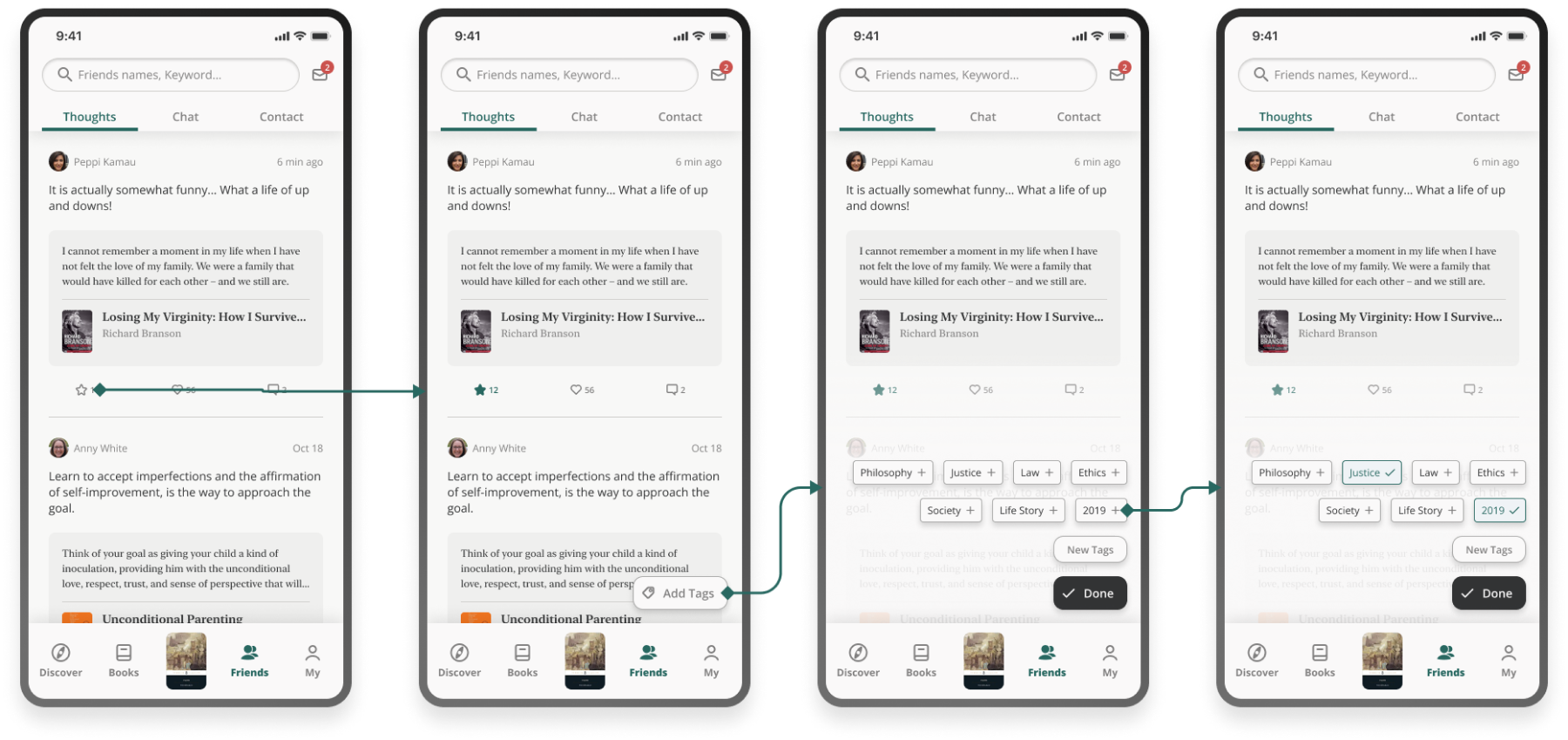
Tagging is optional by design: readers who don’t care are never interrupted, and those who do can tag notes, thoughts and chats alike.
Reflections
- Circle back to the problem
a solution is judged by whether it answers the HMW that produced it.
- Mind the MVP scope
phasing belongs in ideation, not in the post-mortem.
- Copy matters
short, precise copy delivers ideas; the wrong word costs more than the wrong layout.